Last updated October 30, 2026
 Sweep & inspection
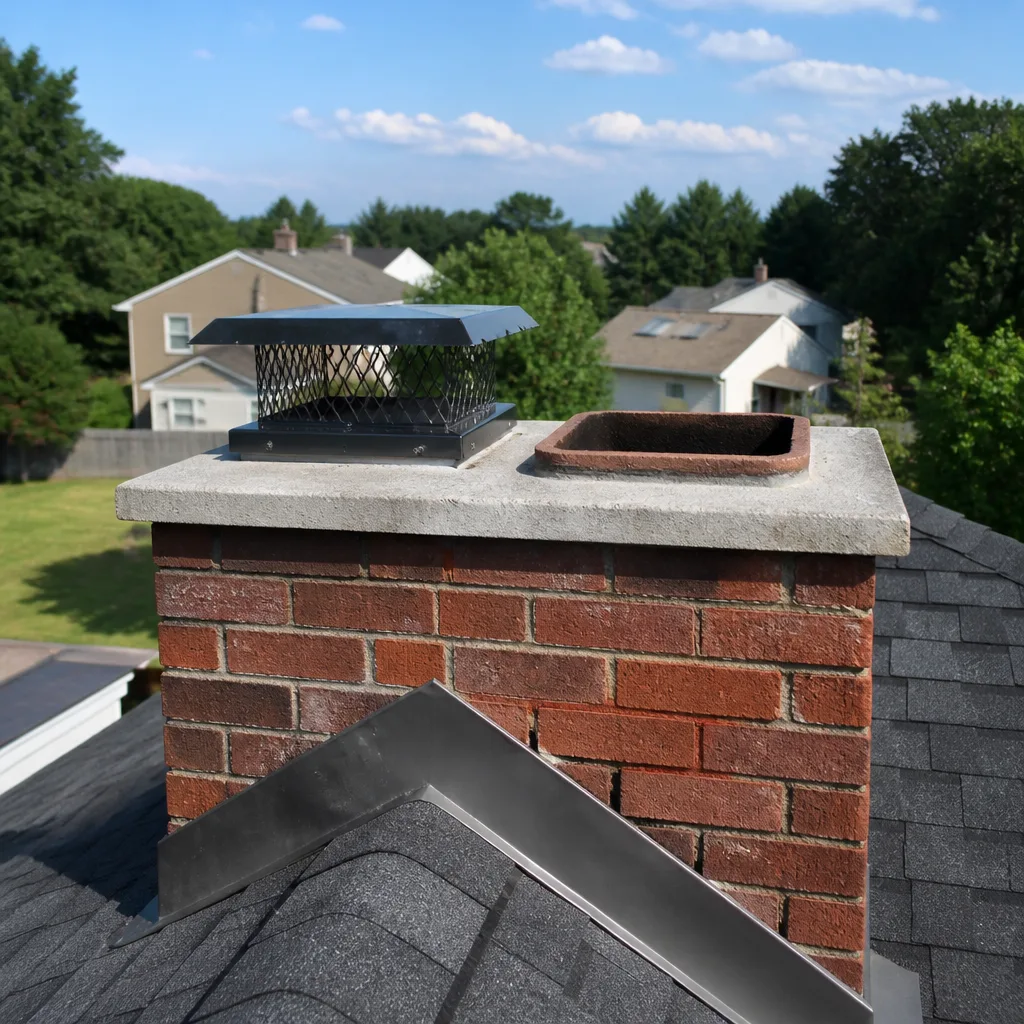
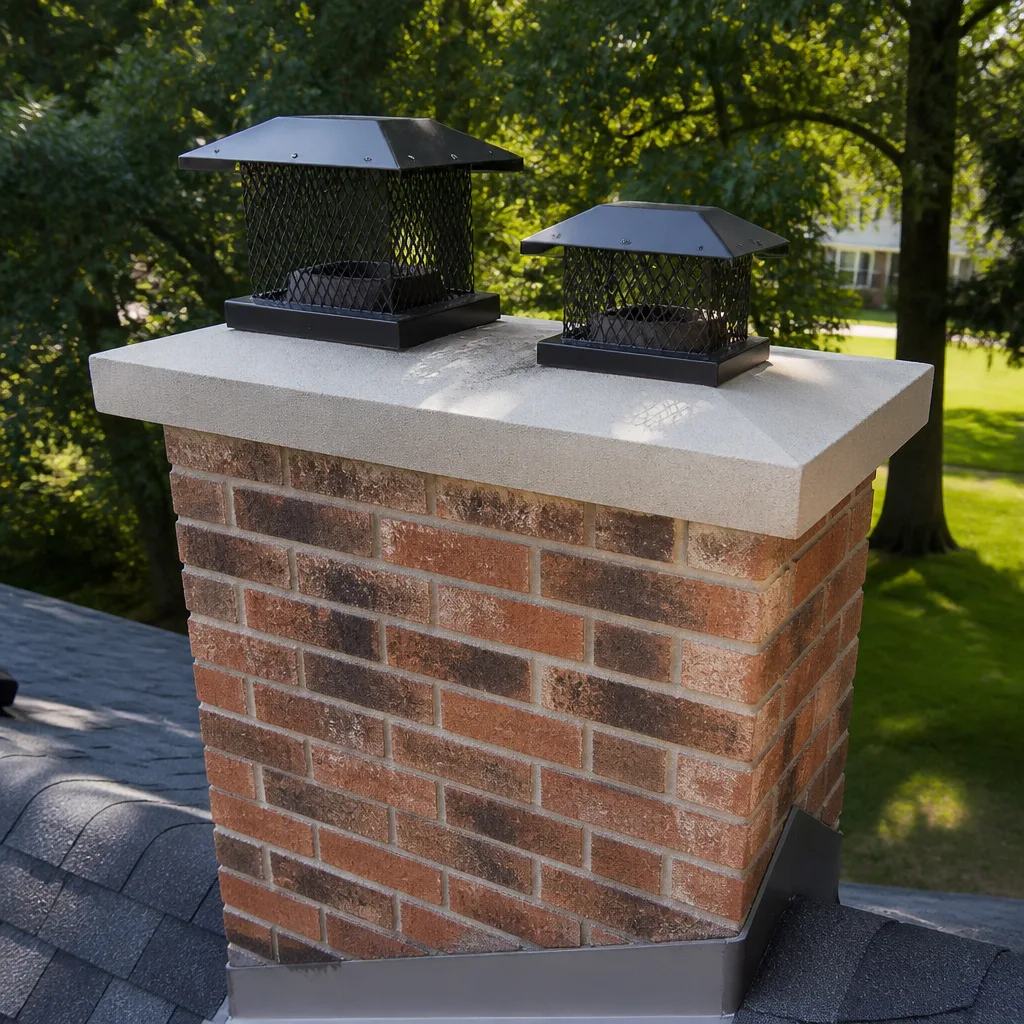 Caps & crowns
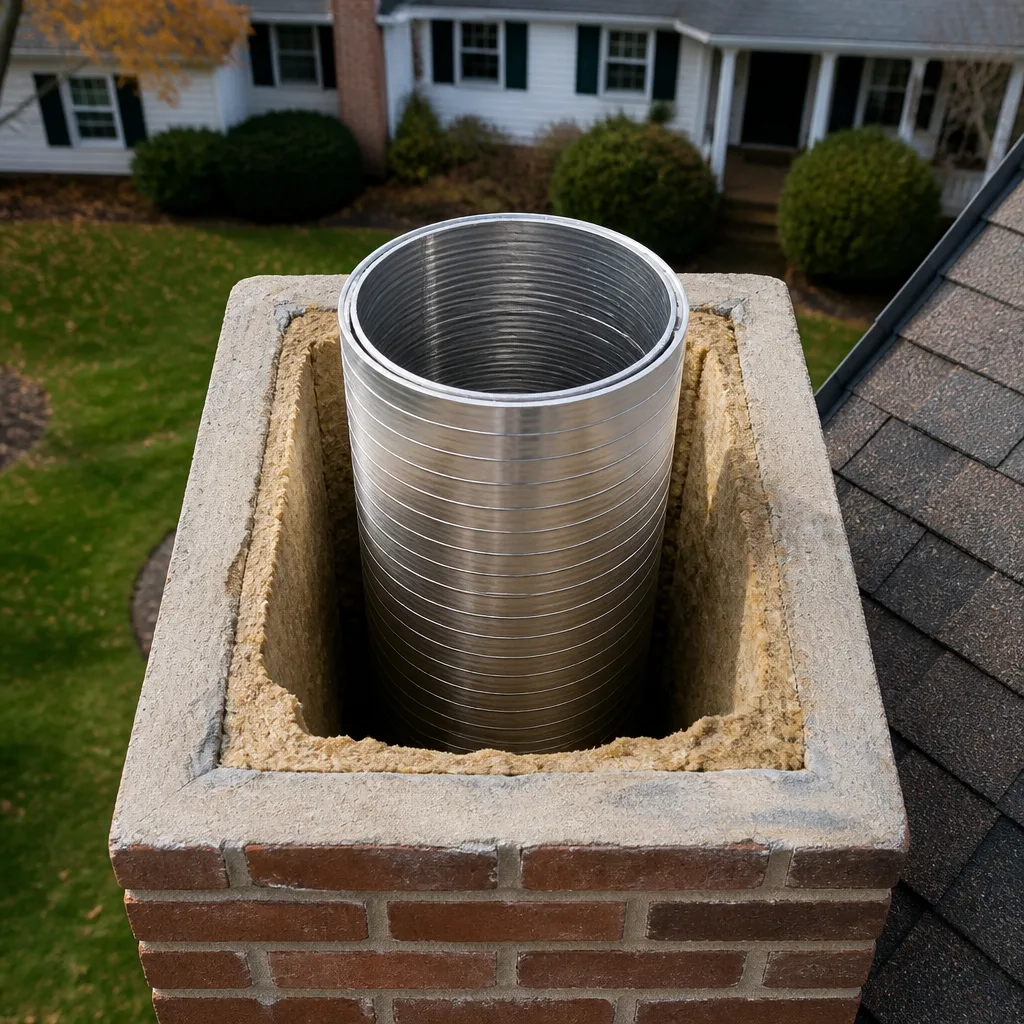 Flue relining
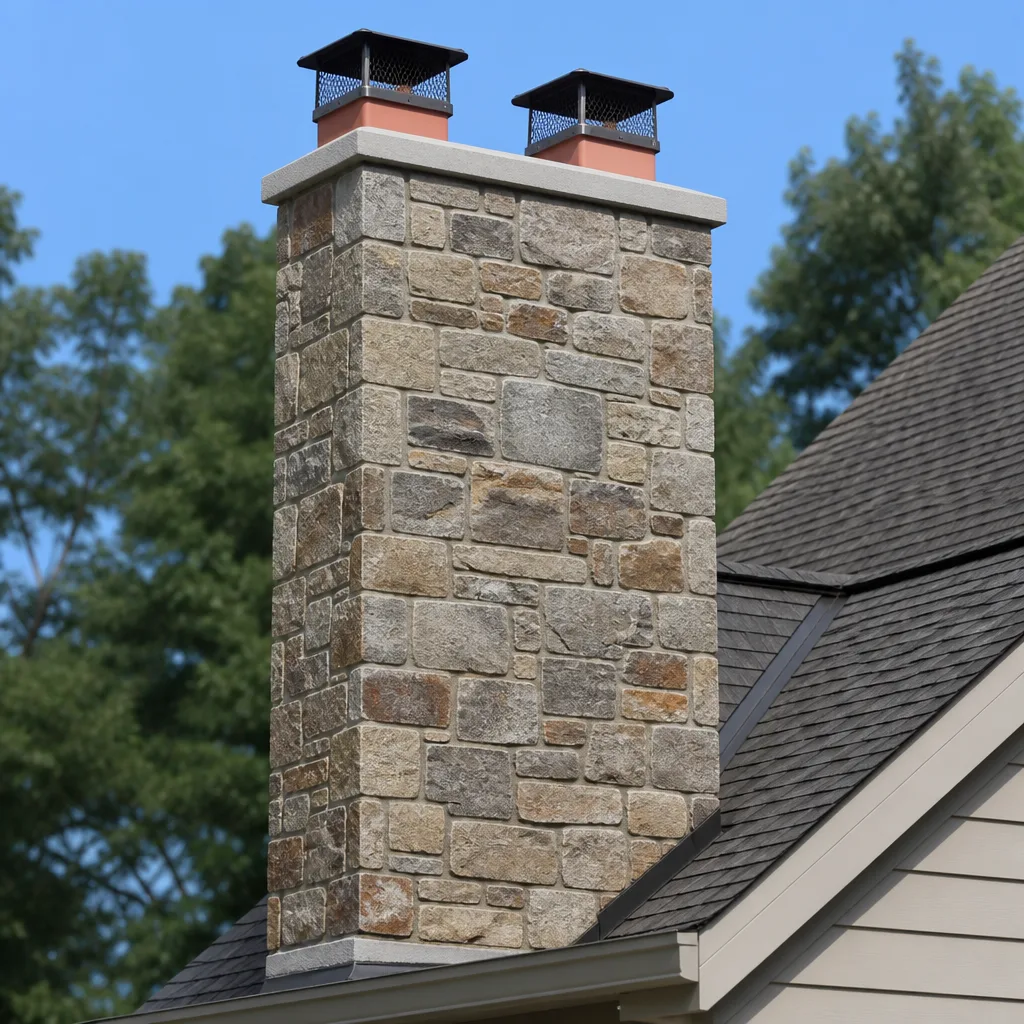 Masonry repair
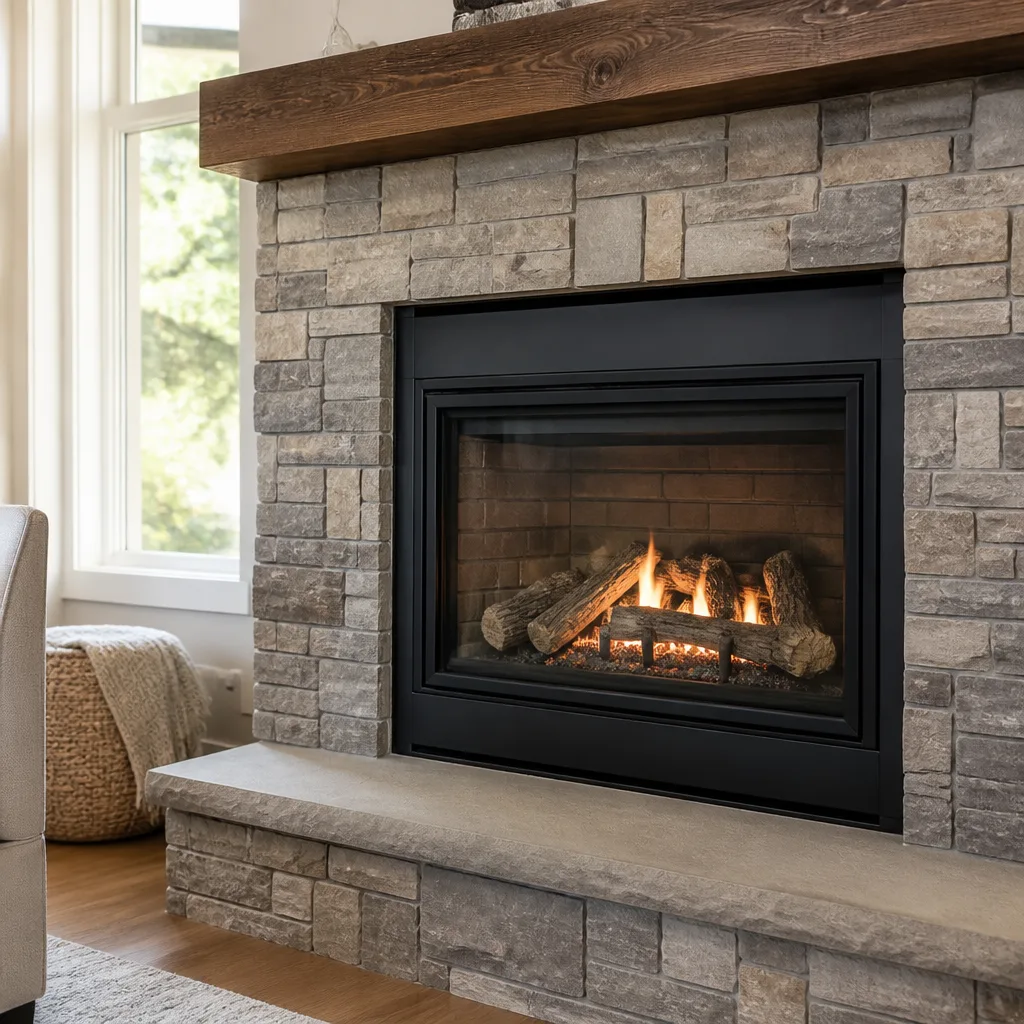 Gas fireplace service
Level 1 sweep and inspection to the NFPA 211 annual standard - flue, crown, cap, and flashing checked and photographed
Chimney sweep logs do not sweep chimneys. They loosen some creosote - which then falls where a brush and vacuum still have to collect it.
DIY vs Professional Chimney Cleaning: The Moreno Valley Homeowner’s Decision Guide
Every winter, Moreno Valley homeowners light fires in chimneys that haven’t been inspected since the previous spring, trusting that last year’s performance guarantees this year’s safety. It doesn’t. Creosote accumulates in ways that are invisible from the hearth, and the difference between a clean chimney and a safe chimney often comes down to what’s happening inside the flue liner, where no homeowner can see. This guide breaks down exactly what you can do yourself, what you shouldn’t attempt, and why the decision matters more in Moreno Valley than in most California cities, given our specific housing stock and burn-season patterns.
Styles & brands we work with
Quick Answer
You can brush a chimney yourself, but you cannot inspect one. DIY cleaning removes some surface creosote from accessible flue walls; it does not assess liner cracks, hidden blockages, drafting problems, or clearance violations that a professional inspection catches. In Moreno Valley, where prefab factory-built fireplaces are common and insurance carriers scrutinize fire claims, the annual professional inspection is the floor, not the ceiling.
Table of Contents
- What DIY Chimney Cleaning Actually Accomplishes
- What DIY Chimney Cleaning Honestly Misses
- Creosote Stages: When Brushing Is No Longer Enough
- The Prefab Reality: Why Moreno Valley Homes Need Manufacturer-Specific Care
- The California Insurance Angle No One Tells You About
- DIY Tools and Costs: What You’re Actually Signing Up For
- The One Task You Should Always Hire Out
- Common Mistakes to Avoid
- When to Call a Professional
- Frequently Asked Questions
- The Bottom Line
What DIY Chimney Cleaning Actually Accomplishes
Let’s be direct about what a homeowner with a chimney brush kit can achieve. You can remove loose, powdery creosote from the first several feet of flue below the chimney cap. That’s it. If your fireplace produces light smoke and you burn seasoned hardwoods exclusively, a once-a-year brushing with a properly sized poly or wire brush will knock down the fluffy, gray Stage 1 creosote that forms on flue walls. This is real maintenance, and it does reduce the fuel load available for a chimney fire.
A basic DIY setup requires: a chimney brush sized to your flue dimensions, fiberglass or polypropylene rods, a drop cloth, a shop vacuum with a HEPA filter, safety goggles, and a dust mask rated for fine particulates. Most homeowners in Moreno Valley spend between $80 and $150 on entry-level equipment. The brushing motion itself is straightforward: insert the brush from the top if you’re comfortable on the roof, or from the firebox using a bottom-up kit that keeps soot out of the living room. Done carefully, this takes 45 minutes to two hours.
But here’s what matters: the brush touches only what it touches. Flue walls behind the brush path get partial clearing. The smoke shelf, where creosote accumulates heavily and where most chimney fires actually begin, is almost impossible for a homeowner to clean thoroughly without specialized tools. The chimney cap and screen, which in Moreno Valley’s dry summers get caked with dust and occasionally critter nests, require roof access and cap removal that most homeowners rightfully avoid.
We’re not anti-DIY here at Mantel Chimney Sweep. We’re honest about what it buys you. A homeowner who brushes their own chimney and burns dry wood is reducing risk. A homeowner who brushes their own chimney and believes they’re getting the same result as a professional cleaning is misinformed. Those are different outcomes, and the gap between them is where chimney fires live.
What DIY Chimney Cleaning Honestly Misses
The reason professionals treat cleaning and inspection as inseparable is that the cleaning process itself is diagnostic. When our technicians run a brush through a flue, they’re listening for changes in resistance, noting where creosote is thickest, feeling for the telltale catch of a cracked flue tile or a separated prefab panel. Those tactile and auditory signals tell us more about the chimney’s condition than the actual soot removal does.
A homeowner brushing from the top or bottom has no comparable feedback loop. Even someone using a camera on a flexible rod, which a few ambitious DIYers do, lacks the context to interpret what they’re seeing. A hairline crack in a clay tile flue might look like a shadow to an untrained eye. To a certified sweep, it’s a potential point of heat transfer into combustible framing, a finding that changes the entire remediation plan.
In Moreno Valley specifically, there’s a regional factor at play. Our summer heat cycles cause thermal expansion and contraction in masonry chimneys at rates that differ from coastal California. The clay soil profile in parts of the Moreno Valley basin also settles unevenly, putting stress on chimney foundations over years. A hairline crack that developed in August won’t be noticed by a homeowner in December unless someone specifically looks for it. And that crack is exactly where a chimney fire can escape the flue.
The average professional chimney sweep in California performs somewhere between 200 and 400 inspections per year. That pattern recognition matters. The homeowner inspecting their own chimney is doing it for the first time, every time. They have nothing to compare their chimney against except the memory of how it looked the previous year, which is usually a vague recollection of “it seemed fine.”
Creosote Stages: When Brushing Is No Longer Enough
Creosote forms in three recognized stages, and the stage your chimney reaches determines whether any amount of homeowner brushing will help. This is the threshold question for the DIY decision, and it’s one you can partially gauge yourself before deciding whether to climb on the roof or call a pro.
Stage 1 Creosote is the flaky, dusty residue that resembles coffee grounds stuck to the flue wall. It’s the result of reasonably hot fires burning reasonably dry wood. A homeowner with a properly sized brush can manage this stage. Most Moreno Valley homes that burn seasoned oak or almond firewood with adequate airflow will stay in Stage 1 for a full season.
Stage 2 Creosote is the crunchier, tar-like buildup that looks like black cornflakes or puffed rice. It forms when fires burn moderately hot but not consistently, or when fires are allowed to smolder overnight. At this stage, manual brushing becomes meaningfully less effective. The creosote adheres more stubbornly, and a standard homeowner brush will polish the surface of the buildup without removing it. Professional rotary cleaning systems with chain flails or specialized scraping heads are the tools that actually clear this.
Stage 3 Creosote is the glossy, hard, glaze-like coating that forms when creosote is repeatedly heated and cooled without being fully burned off. It looks like a shiny black lacquer coating the flue walls. No amount of manual brushing removes Stage 3 creosote. Attempting to chip it away with improvised tools can damage the flue liner. Removing Stage 3 requires chemical treatments, professional rotary tools, or both, and sometimes the right answer is a liner restoration rather than repeated aggressive cleanings.
The practical question for Moreno Valley homeowners: which stage is your chimney in? You can test it yourself. Wear a glove, reach into the flue above the damper if you can safely access it, and touch the flue wall. Powdery residue that wipes off easily? Stage 1, brush away. Crunchy flakes that resist wiping? Stage 2, call someone with rotary equipment. Shiny, hard, glassy surface? Stage 3, do not attempt DIY removal. You’ll waste a weekend and make the situation worse.
The Prefab Reality: Why Moreno Valley Homes Need Manufacturer-Specific Care
A significant portion of Moreno Valley housing stock, especially in subdivisions built from the 1980s through the 2000s, uses factory-built prefab fireplaces rather than traditional masonry chimneys. This is not a minor difference. The cleaning protocol for a prefab unit is different from that for a masonry chimney, and doing the wrong one can destroy the unit.
Prefab fireplaces are UL-listed appliances with specific manufacturer instructions for maintenance. Most specify that cleaning should be performed with poly brushes, not wire brushes, because the interior panels are thin refractory material that wire bristles can scratch or gouge. Several manufacturers also specify chemical cleaning agents that are approved for their particular refractory formula, while others prohibit certain acids entirely. The manufacturers whose specifications we work with most often in Moreno Valley include Olympia Chimney and Famco, both of which publish detailed maintenance requirements that differ by unit model.
A homeowner who buys a generic chimney brush kit and scrubs a prefab flue the way they’d scrub a masonry one risks: scratching the thin stainless inner liner, dislodging the insulation between inner and outer wall, or damaging the refractory panels behind the firebox. That damage is not cosmetic. A compromised prefab unit can overheat the surrounding framing, and because the unit is enclosed in a chase, the homeowner won’t see the problem developing until it’s already serious.
Beyond the cleaning itself, prefab units have life expectancies. Most manufacturers rate their units for 20 to 30 years of normal use, after which replacement is recommended regardless of how well the unit has been maintained. A professional inspection includes determining the manufacture date of your prefab unit and checking it against its rated service life. A homeowner DIY cleaning catches none of this. You could be brushing a unit that the manufacturer considers obsolete, and you’d never know it until something fails.
The California Insurance Angle No One Tells You About
California insurance carriers have become increasingly particular about chimney-related fire claims in the last decade. The standard homeowners policy covers chimney fires, but the claim process in the aftermath is where things get difficult for the DIY-only homeowner. When an adjuster evaluates a chimney fire, they’re looking for something specific: could this fire have been prevented by reasonable maintenance? And more pointedly: can we establish that the homeowner neglected a known hazard?
Here’s what we’ve seen in our experience with Moreno Valley homeowners navigating post-fire claims. If your chimney fire happened two years after your last professional cleaning and inspection, and you can produce the documentation, the claim proceeds normally. If your chimney fire happened after five years of “I brush it myself every fall,” the adjuster has a different conversation. They start asking for proof of professional inspection. They ask when the chimney was last evaluated by a certified technician. They ask whether creosote buildup was ever professionally assessed. If the answers are all “never,” the claim doesn’t get denied outright, but it gets scrutinized in ways that delay payment and reduce settlements.
Some carriers in wildfire-prone areas of California are now requiring chimney inspections as part of their underwriting process for homes with wood-burning fireplaces. We’ve had Moreno Valley customers whose insurance renewals included a line item requiring a professional chimney inspection certificate. This is the direction the market is moving. The homeowner who has maintained a professional inspection record is in a different position than the one who hasn’t.
The documentation itself matters. A receipt for a brush kit from a Moreno Valley hardware store does not constitute a maintenance record. A dated invoice from a professional chimney sweep showing the condition of the flue at the time of inspection does. In the event of a fire, that documentation is the difference between a straightforward claim and a contested one.
DIY Tools and Costs: What You’re Actually Signing Up For
Let’s price out the genuine cost of DIY chimney cleaning, because the “$80 brush kit” figure understates what’s actually involved. Here’s what a Moreno Valley homeowner needs to do the job properly:
- Chimney brush sized to your flue: $25 – $60. Sizing matters more than most people realize. A brush too small won’t contact the flue walls. A brush too large will jamb, and forcing a jammed brush can break the rod and leave brush and rod stuck in the flue, which is not a problem anyone wants.
- Fiberglass or polypropylene rods: $30 – $70 for a set that reaches a typical single-story flue. For two-story Moreno Valley homes, you may need two sets or an extension kit.
- Drop cloth and plastic sheeting: $15 – $25. Soot travels. It travels impressively.
- Shop vacuum with HEPA filter: $80 – $150 if you don’t already own one. A standard household vacuum will not survive this job and will blow fine soot particles into your living room air.
- Goggles, respirator mask, gloves: $25 – $40. Creosote dust is not something you want in your lungs or eyes.
- Roof safety equipment if accessing from the top: appropriate footwear, possibly a harness and anchor point. Cost varies widely, but a fall from even a single-story Moreno Valley roof can be life-altering.
Realistic total for a first-time DIYer: $200 – $350, plus an afternoon of labor. That’s not an argument against doing it yourself. It’s context for comparison. A professional sweeping in the Inland Empire typically runs $150 – $290 depending on chimney type and condition, and that includes the inspection that the DIY process cannot replicate. When you factor in the equipment cost, the labor, the roof risk, and the inspection you’re still not getting, the economics of the DIY approach narrow considerably.
The One Task You Should Always Hire Out
If there’s a single sentence to take from this entire guide, it’s this: never attempt to remove or repair a chimney liner yourself. It’s not a task that sits somewhere on the DIY complexity spectrum. It’s in a different category entirely, one where professional liability and high-temperature material science intersect with building code in ways that no homeowner should be navigating alone.
Here’s why this matters in Moreno Valley specifically. Our burn season runs from roughly late October through March, and many homes use their fireplaces as supplemental heating during cold winter nights when the valley floor drops into the 30s. A chimney with a compromised liner is not simply inefficient; it’s a structural fire hazard. The liner’s job is to contain the heat and combustion gases inside the flue and direct them up and out. When that liner cracks or separates, the chimney becomes a channel for heat moving directly into the wood framing that surrounds it in most Moreno Valley homes.
Professional liner work involves assessing the type of liner (clay tile, stainless steel, or cast-in-place), determining whether repair or replacement is warranted, and using materials rated for the unit’s specific measurements and fuel type. At Mantel Chimney Sweep’s chimney repair service, the work typically involves either a HeatShield cerfractory sealant application for restorable flues or a DuraFlex flexible stainless steel liner system for full replacements. These are professional materials with specific installation protocols. They’re not sold at retail, and they’re not designed for homeowner installation.
The decision tree for a homeowner is straightforward. If your professional inspection shows liner damage, that’s a repair project. If you’ve been skipping inspections for years, you don’t know whether your liner is damaged, and that’s the problem in itself. A professional chimney sweep in Moreno Valley includes liner assessment as part of the standard cleaning visit. That’s the baseline service, not an upgrade.
Common Mistakes to Avoid
- Assuming a clean-looking firebox means a clean flue. The firebox gets attention because it’s visible. The flue walls, smoke shelf, and chimney cap collect the real creosote burden, and none of those are visible from the living room. In our experience with Moreno Valley homes, a clean firebox with a heavily coated flue is a common combination in houses where occupants burn regularly.
- Using a wire brush on a prefab chimney. Wire bristles are designed for masonry flues. Running one through a factory-built prefab unit scratches the thin metal liner and can tear the insulation layer. Most prefab manufacturers, including units from Olympia Chimney that are common in Moreno Valley subdivisions, specify poly brushes only.
- Burning unseasoned wood as a workaround for skipping cleanings. Some homeowners reason that if they burn greener wood, maybe the chimney won’t accumulate creosote as fast, or maybe the moisture will keep things from igniting. This is backwards. Unseasoned wood produces more smoke, lower burn temperatures, and dramatically more creosote deposition. Burning green wood in a Moreno Valley fireplace is how Stage 2 and Stage 3 creosote happen.
- Treating chimney sweeping and chimney inspection as the same job. They’re not. A sweep brushes the flue. An inspection evaluates liner condition, damper function, cap integrity, clearance compliance, and dozens of other points. You can brush without inspecting. You cannot inspect without brushes coming out anyway. The professional standard is that they’re inseparable.
- Ignoring the dryer vent while focusing on the fireplace. The chimney gets attention because it’s a fireplace. The dryer vent is out of sight in the laundry room, and it’s the more common fire ignition source in modern Moreno Valley homes. It’s a separate system with a separate maintenance routine, and it deserves the same professional attention.
- Assuming one good cleaning resets the clock for five years. The National Fire Protection Association recommends annual inspection regardless of how clean the chimney looks or how infrequently you burn. Creosote accumulation depends on burn frequency, wood quality, and fire temperature, and those variables change from year to year.
- Waiting until fall and then discovering your chimney needs repairs in December. Moreno Valley’s chimney service demand spikes in October and November when the first cold snap arrives. By December, repair backlog is a real thing. Spring and summer are the right time for inspection and any needed repairs, giving you the entire burn season with a known-good chimney.
When to Call a Professional
Call a professional if you see glossy Stage 3 creosote inside your flue, if you have a prefab fireplace and are unsure of its cleaning requirements, if it’s been more than two years since your last professional inspection, if you smell smoke in the house when the fireplace isn’t in use, if you notice white staining on the exterior chimney brick (a sign of moisture penetration), if your fireplace has a structural issue like a cracked firebox panel, or if you’ve been brushing it yourself for years and want to know what’s actually going on inside the flue. Mantel Chimney Sweep offers free estimates in Moreno Valley – call (844) 821-5749 to schedule.
Frequently Asked Questions
Professional chimney sweeping in Moreno Valley typically runs between $150 and $290 for a standard cleaning, depending on chimney type, height, and creosote condition. Prefab fireplace cleanings fall on the lower end of that range, while two-story masonry chimneys with moderate creosote buildup fall on the upper end. The fee includes the visual inspection that DIY cleaning cannot provide. Call (844) 821-5749 for a specific quote on your chimney.
The National Fire Protection Association recommends annual inspection for all chimneys, with cleaning performed as needed based on creosote accumulation. In Moreno Valley, where burn season runs roughly November through March, most homes with regular wood-burning use need a professional cleaning at least once per year. Homes with occasional use may need cleaning every two years, but should still have the annual inspection.
You can reduce surface creosote safely with the right equipment and attention to safety protocols, but you cannot perform the inspection that accompanies professional cleaning. The brushing itself is not the highest-risk part; the roof access, the unassessed flue condition, and the false confidence that follows an incomplete cleaning are. If you choose to brush your own chimney, schedule a professional inspection anyway.
A sweep removes creosote and soot from the flue walls, smoke shelf, and firebox using brushes and vacuum equipment. An inspection evaluates the structural and functional condition of the entire chimney system, including the liner, damper, cap, crown, flashing, and clearances. They’re performed together at the professional level because cleaning without inspection leaves critical unknowns unresolved.
Most California insurance carriers do not require professional cleaning as a policy condition, but they do evaluate maintenance records when processing fire claims. A chimney fire following years of documented professional inspections proceeds differently than one following years of DIY cleaning with no inspection records. Some carriers in wildfire-prone regions are now requesting inspection documentation during underwriting.
White staining on exterior brick indicates moisture penetration. Smoke odors in the home when the fireplace is unused suggest draft or liner problems. Crumbling mortar joints, cracked firebox panels, and rust on the damper assembly all point to repair needs. If your chimney has visible damage or you suspect liner issues, Mantel Chimney Sweep’s repair service can assess the condition and recommend the appropriate fix.
Dryer vent cleaning is the one household fire-prevention task that nearly every homeowner neglects, primarily because the vent is hidden and the risk is invisible. Lint accumulates inside the vent run, restricts airflow, forces the dryer to work harder, and creates exactly the conditions that lead to dryer fires. Professional dryer vent cleaning in Moreno Valley reaches the full length of the vent run, which homeowner tools cannot accomplish. This is a task worth hiring out annually for homes that run the dryer regularly.
The Bottom Line
The DIY chimney cleaning question resolves to this: brushing removes what you can reach, but the safety of your chimney depends on what happens where you cannot. In Moreno Valley, where prefab fireplaces are common, summer heat cycles stress masonry chimneys, and insurance carriers are increasingly strict about maintenance documentation, the professional inspection is not a luxury add-on. It’s the baseline. Brush your own chimney if you’re willing to invest in the right equipment and accept the roof risk. But do not confuse brushing with inspection, and do not let DIY confidence prevent you from getting the one assessment that actually tells you whether your fireplace is safe to burn. Mantel Chimney Sweep provides complete chimney sweeping, inspection, and repair across Moreno Valley. Call (844) 821-5749 for a free estimate.
Written by the team at Mantel Chimney Sweep, serving Moreno Valley since 2018.
See the difference
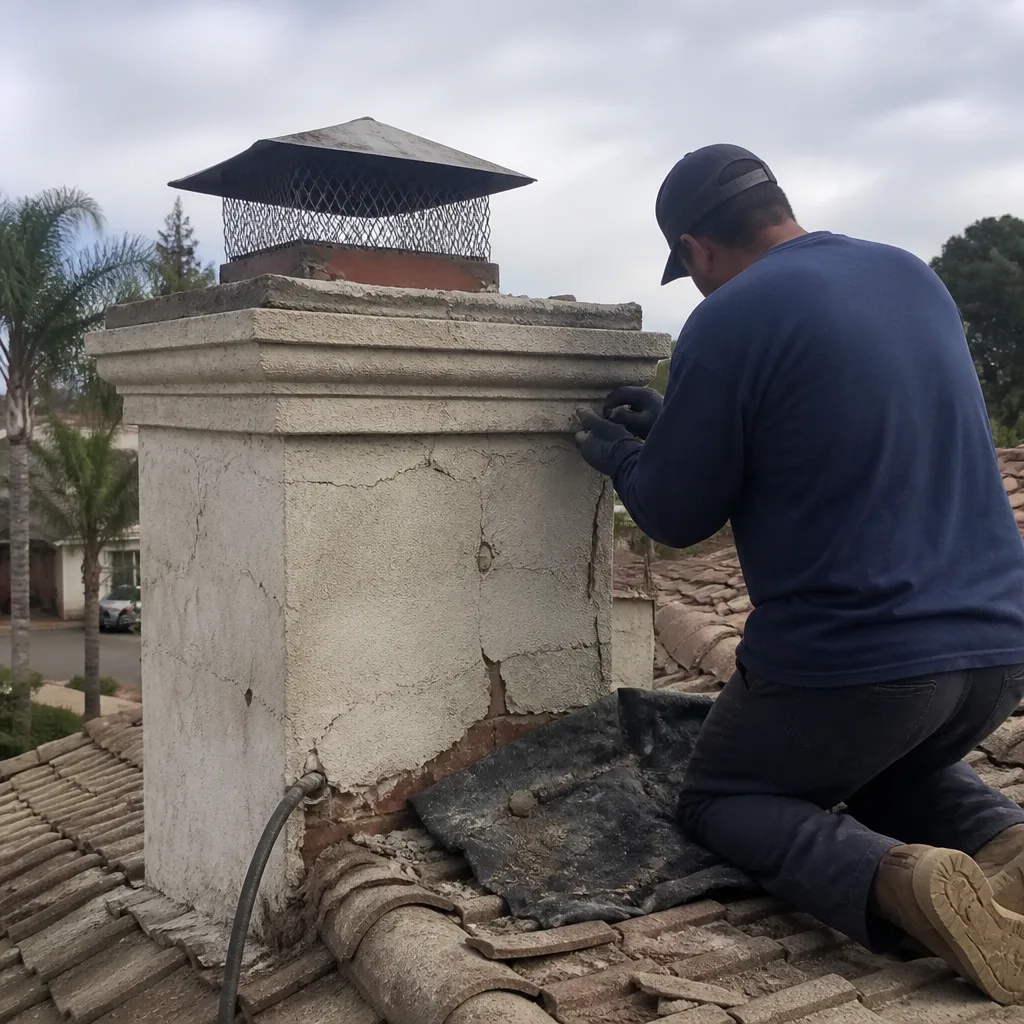 Before
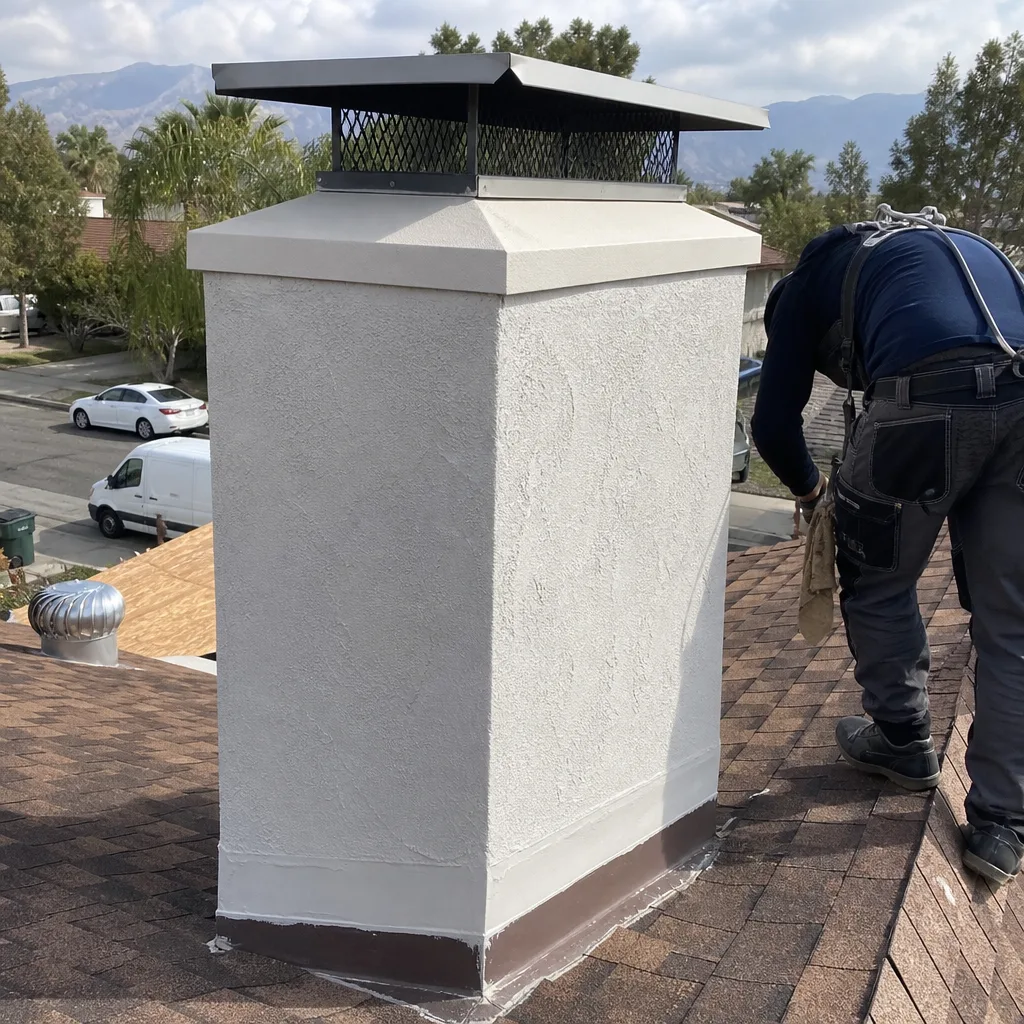 After
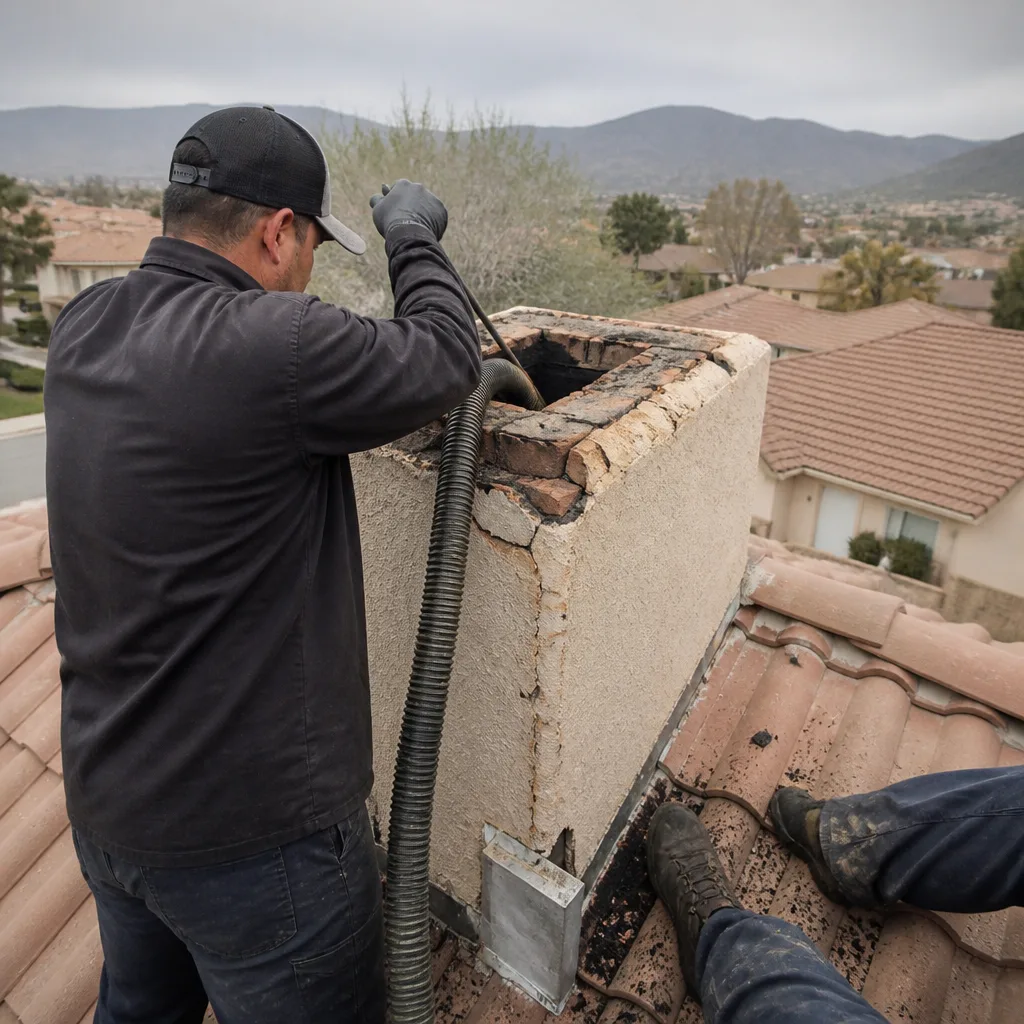 Before
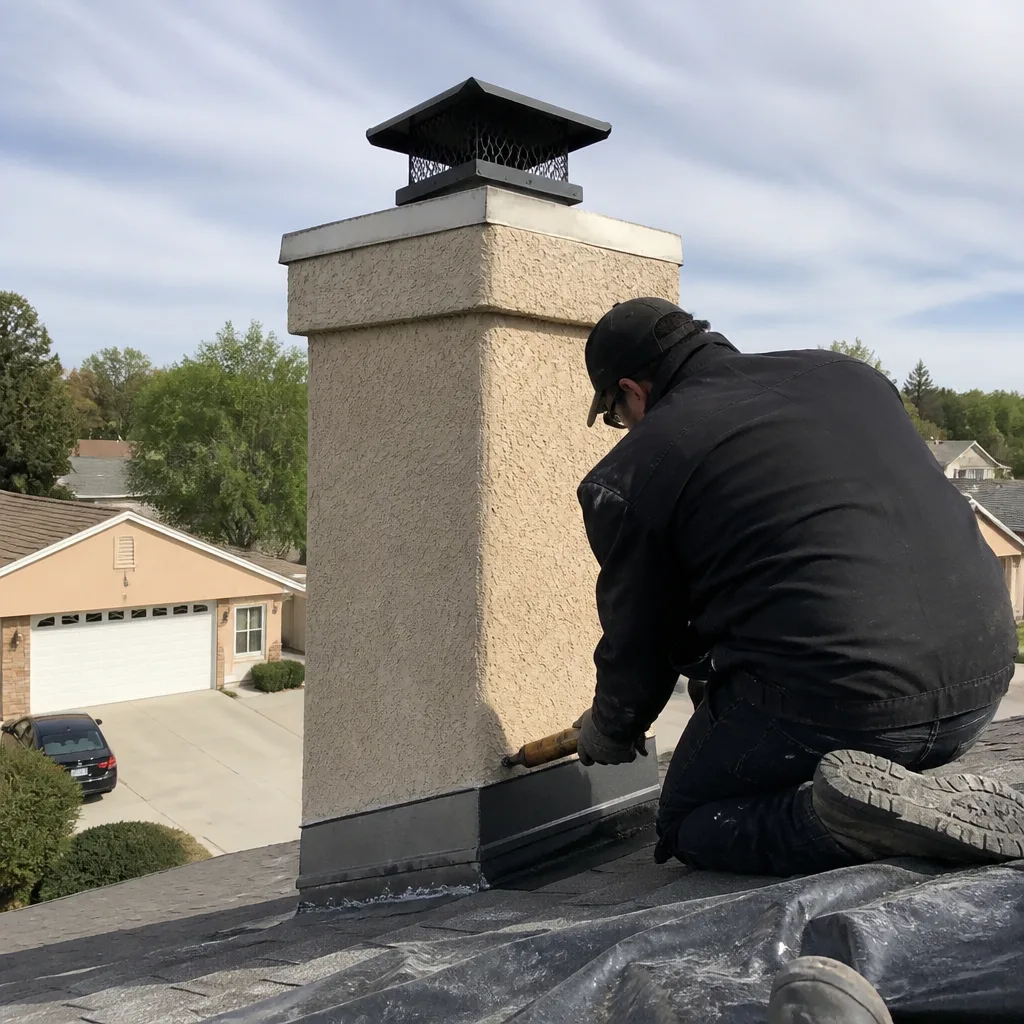 After
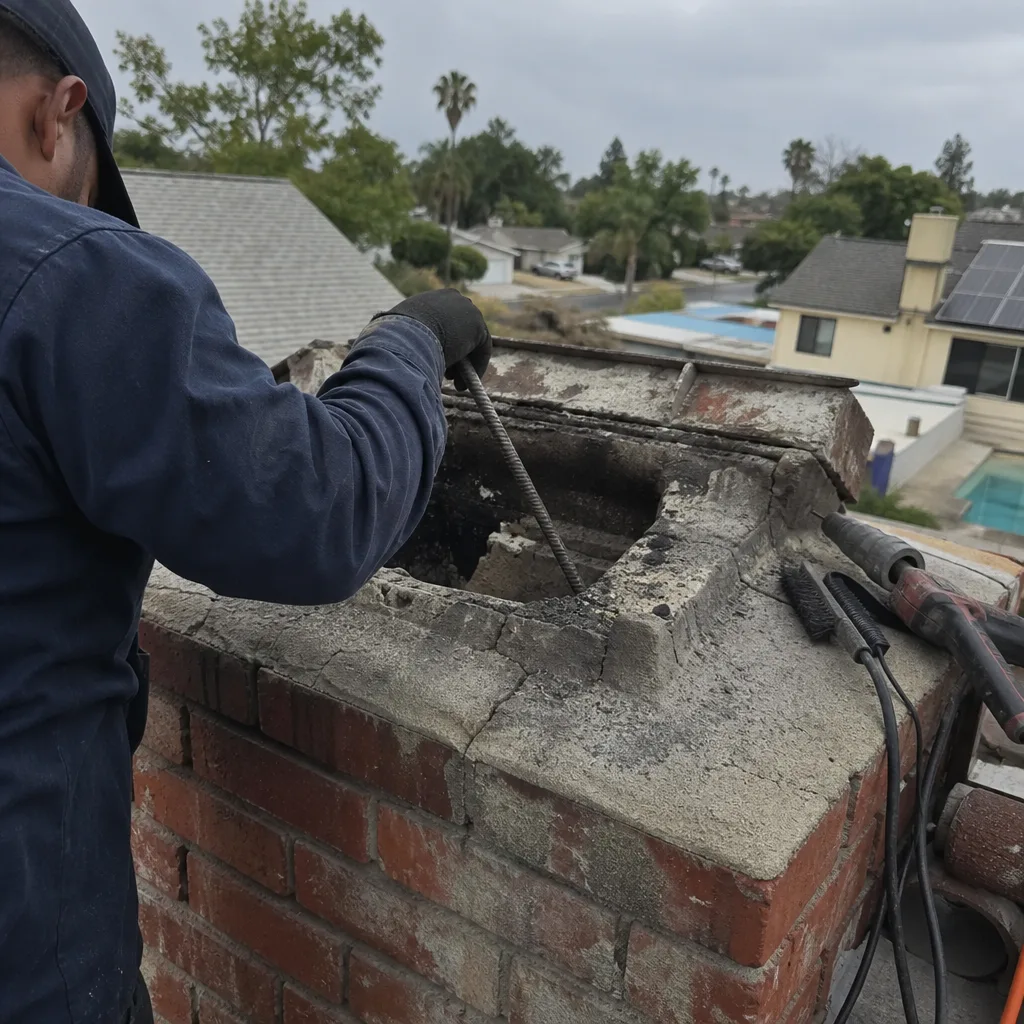 Before
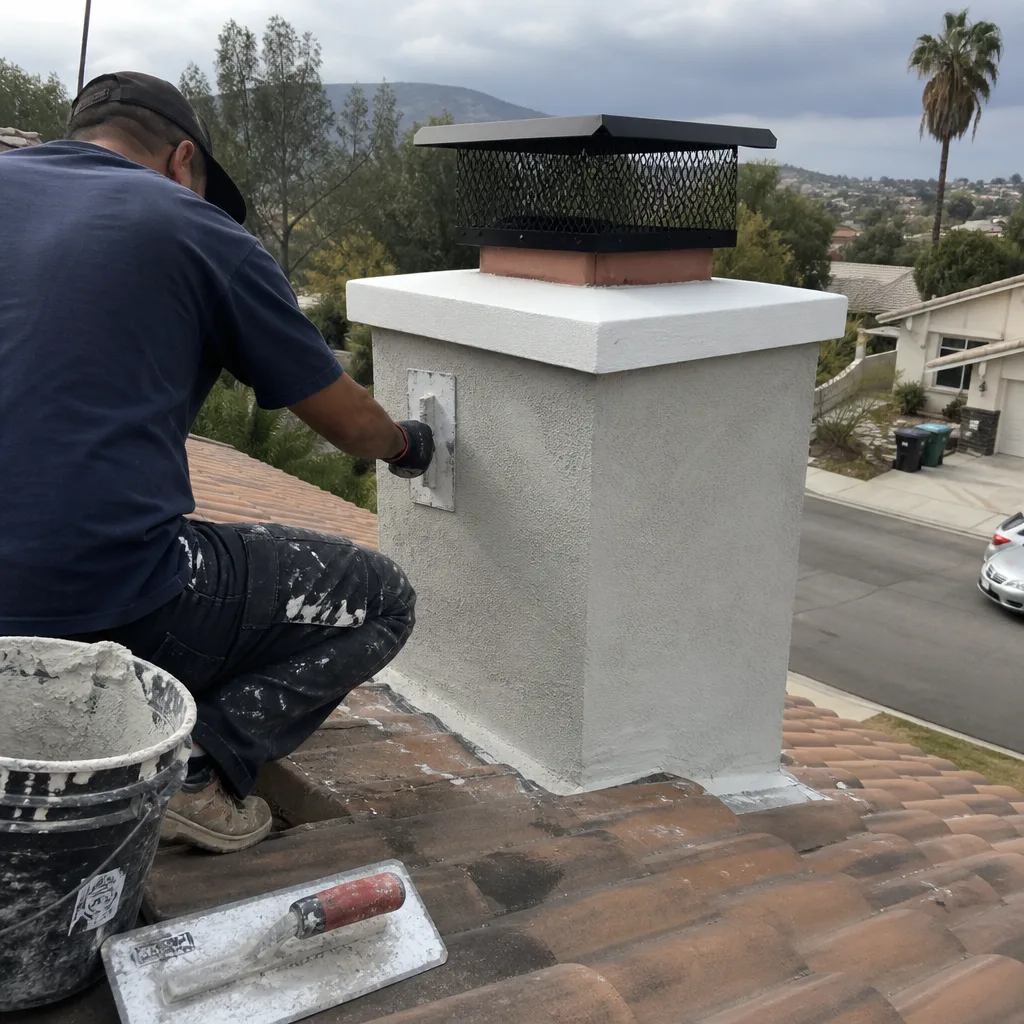 After