Last updated October 30, 2026
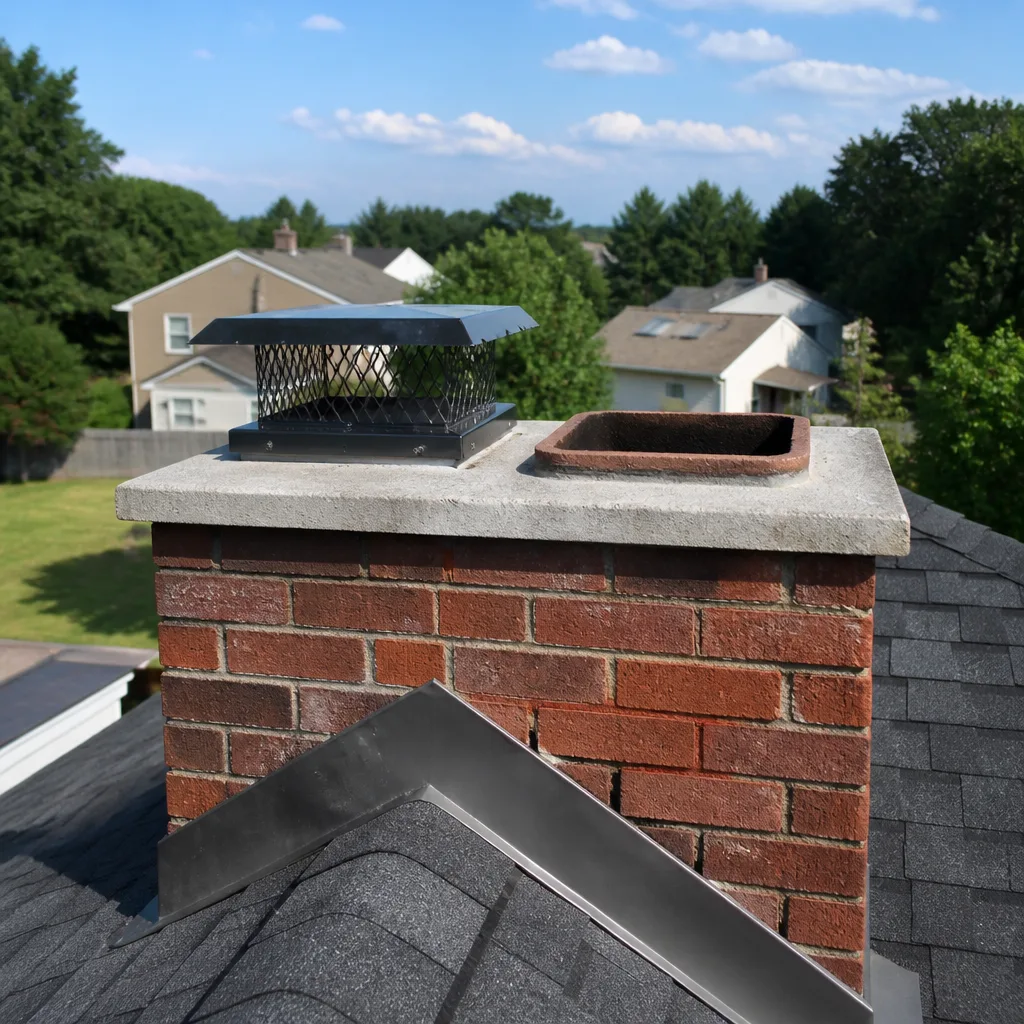 Sweep & inspection
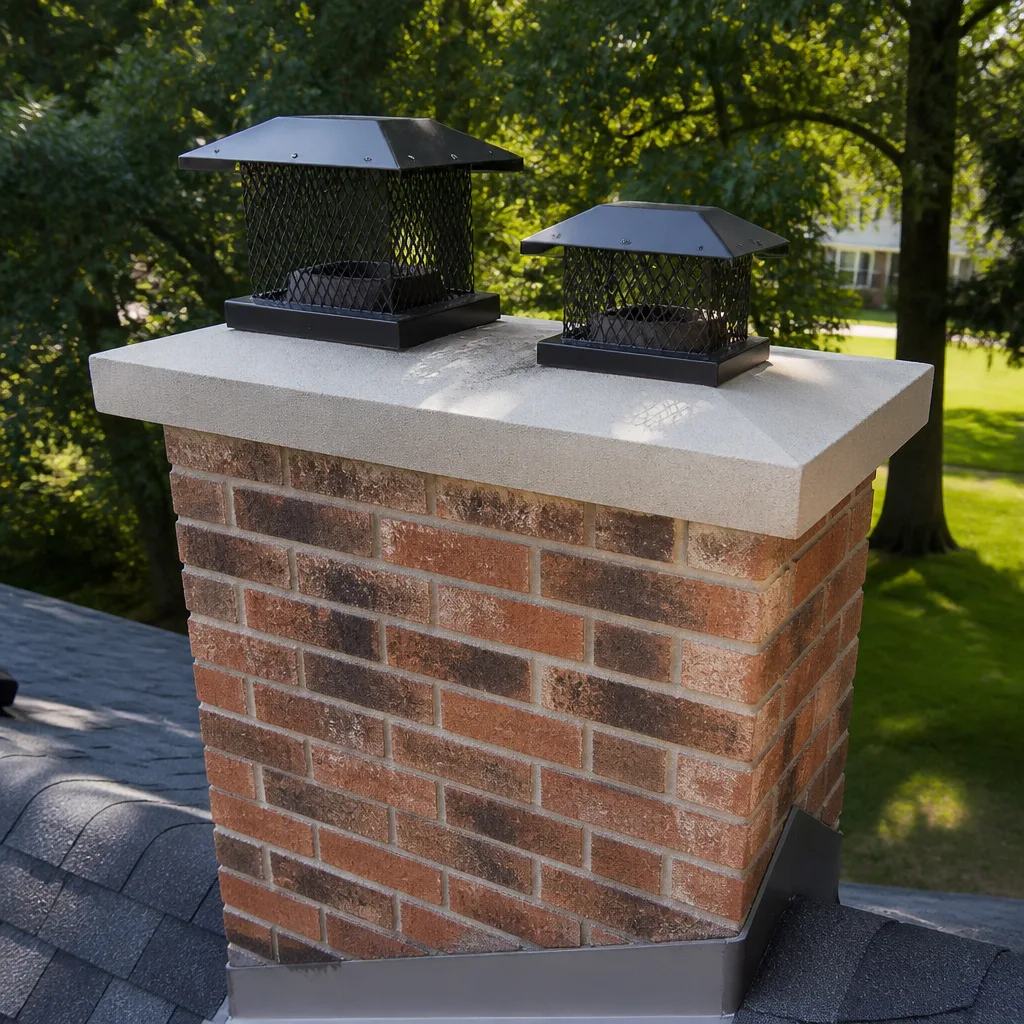 Caps & crowns
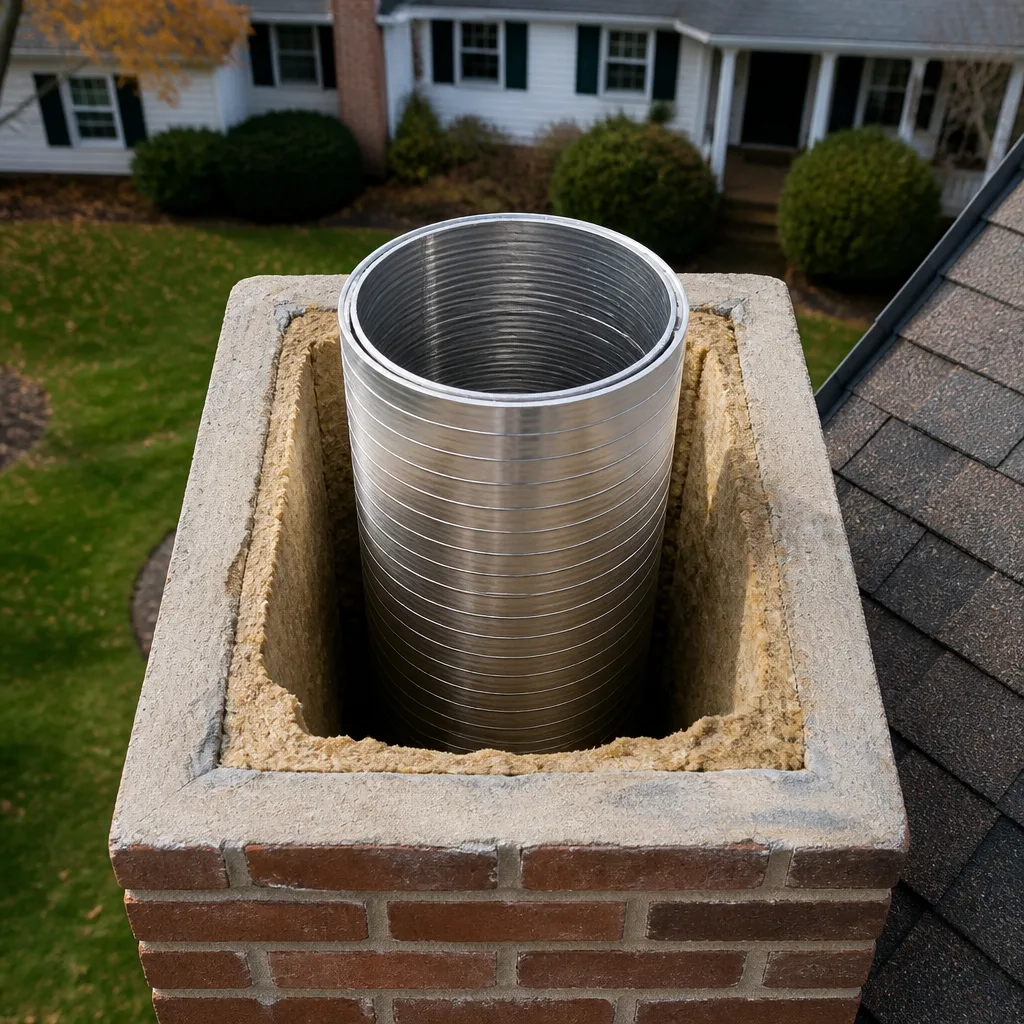 Flue relining
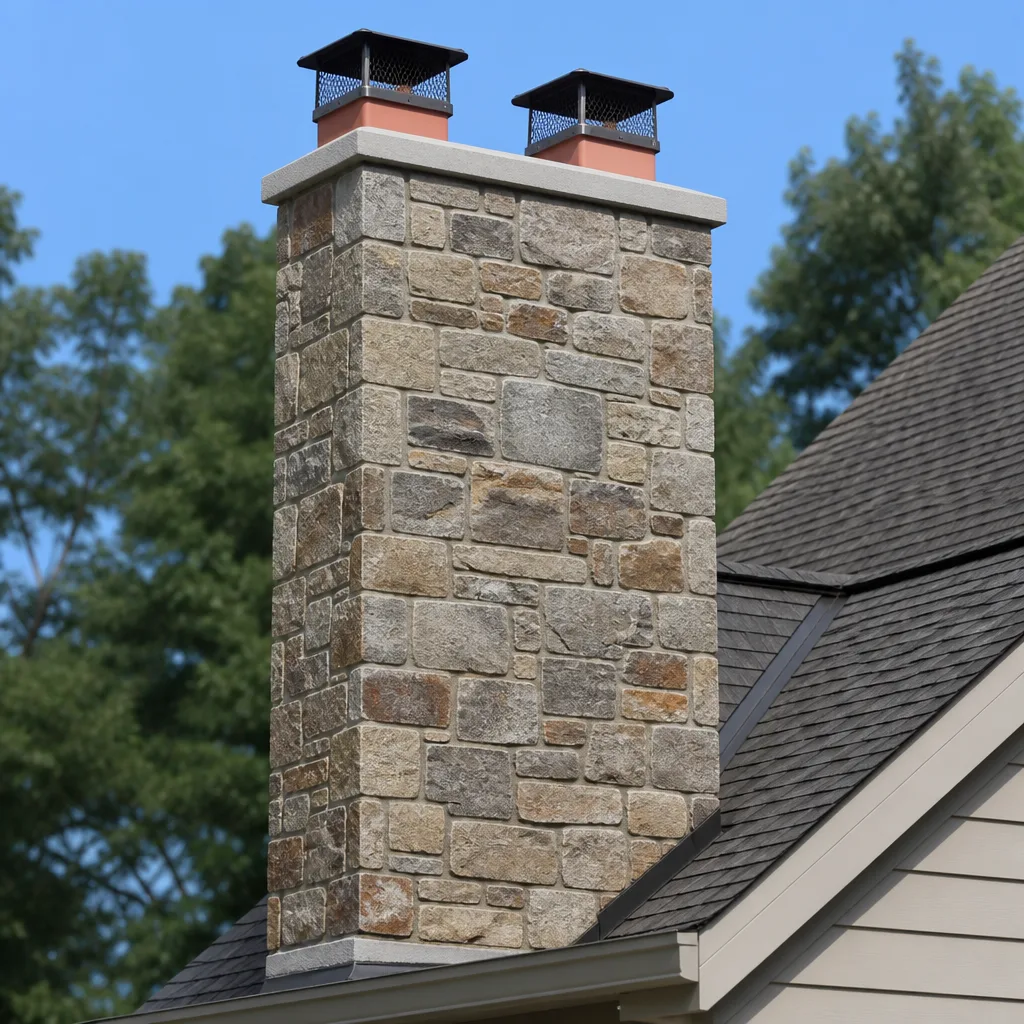 Masonry repair
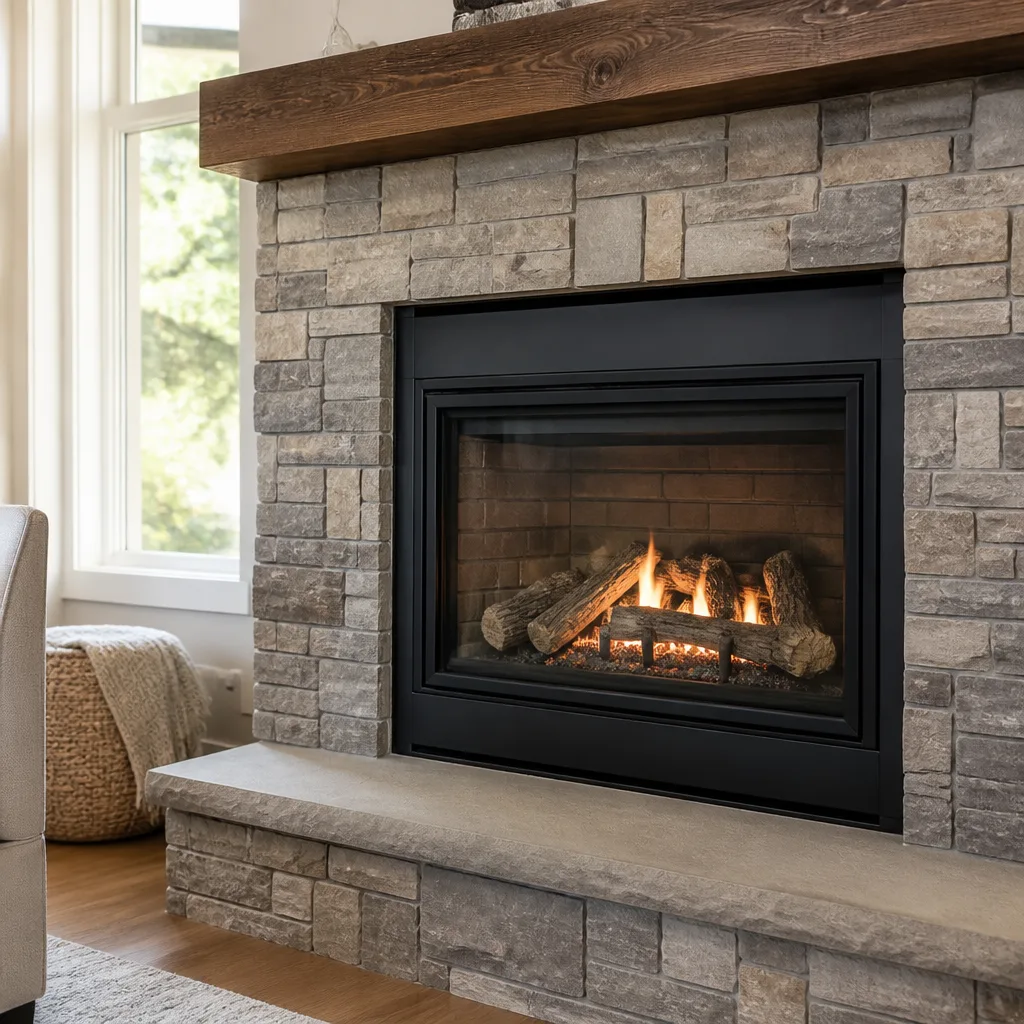 Gas fireplace service
Level 1 sweep and inspection to the NFPA 211 annual standard - flue, crown, cap, and flashing checked and photographed
Chimney sweep logs do not sweep chimneys. They loosen some creosote - which then falls where a brush and vacuum still have to collect it.
Chimney Cleaning Warning Signs: A Moreno Valley Homeowner’s Reference Guide
White staining on the outside of your chimney isn’t a cosmetic issue. It’s called efflorescence, and it means water has already moved through your masonry far enough to carry salt deposits with it. By the time you see it, moisture has been working against your chimney’s structural integrity for months, possibly years. This guide and our Chimney Sweep Troubleshooting: Common Problems and How to Fix Them resource walk through every warning sign a Moreno Valley homeowner should recognize, what each one actually indicates mechanically, and how much time you typically have to act before a nuisance becomes a hazard. We’ll cover what we see most often in this climate, where Santa Ana winds and wildfire smoke create conditions that accelerate chimney deterioration in ways you won’t find in coastal or mountain communities.
Quick Answer
The chimney warning signs that demand immediate attention are smoke rolling back into your living room, white staining (efflorescence) on exterior masonry, a persistent campfire smell when the fireplace isn’t lit, flaking brick or mortar joints, and sounds of debris falling inside the flue. A proper Chimney Sweep in Moreno Valley inspection can determine whether you’re looking at a routine cleaning or a structural repair that needs HeatShield restoration or a DuraFlex liner replacement before your next fire.
Styles & brands we work with
Table of Contents
- Smoke Rollout Into the Room: Not Just a Draft Problem
- Efflorescence and Water Staining: What Moisture Is Actually Telling You
- The Cold Chimney Smell: Creosote, Draft, and Dead Air
- Falling Debris and Flaking Masonry: Liner Movement vs. Surface Wear
- Santa Ana Winds and Wildfire Smoke: What Moreno Valley Homeowners Should Watch For
- The Timeline Between First Warning Sign and Hazard
- Sounds from the Chimney: Settling vs. Structural Movement
Smoke Rollout Into the Room: Not Just a Draft Problem
When smoke spills into your living room instead of going up the flue, the first instinct is to blame wind or a cold chimney. Sometimes that’s accurate. But smoke rollout is also the most commonly misread warning sign we encounter in Moreno Valley homes, because homeowners adjust their damper, crack a window, and move on. The smoke stops, so the problem feels solved. It isn’t.
Three structural causes need to be ruled out before you chalk it up to air pressure. First, a partially collapsed flue liner. Clay tile liners crack and shift over decades of heating and cooling cycles. When a section of tile drops or rotates out of alignment, it narrows the passageway and creates turbulence that forces smoke back down. Second, creosote accumulation that has narrowed the flue to a fraction of its original diameter. A quarter-inch of glazed creosote can reduce draft by 30%. At half an inch, you’re looking at a flue that can’t move smoke efficiently even on a good day. Third, an improperly sized or positioned damper. We’ve seen dampers installed backward, rusted partially shut, or simply sized wrong for the fireplace opening.
Here’s the mechanical reality: smoke follows the path of least resistance. If the flue is clear and properly sized, smoke goes up. If something is obstructing, narrowing, or pressurizing that pathway, smoke finds another exit. The room is the other exit.
What to do: If smoke rollout happens more than once, stop using the fireplace and schedule an inspection with a camera. A visual scan from the roof can’t see mid-flue cracks or partial blockages. We use video inspection on every sweep because the inside of a flue is where the real story is. From there, the fix ranges from a Chimney Repair in Moreno Valley cleaning to HeatShield restoration or a full DuraFlex liner installation, depending on what the camera finds.
Efflorescence and Water Staining: What Moisture Is Actually Telling You
Efflorescence is the white, chalky residue that appears on brick and mortar. It’s mineral salts left behind when water migrates through masonry and evaporates on the surface. The key word is through. Water isn’t sitting on the outside of your chimney. It’s traveling through the brick itself, dissolving minerals along the way, and depositing them where the surface meets air.
In Moreno Valley, we see efflorescence most often on chimneys that face the brunt of winter rain and on homes built in the 1980s and 1990s, when brick quality and mortar mixes varied widely. The water isn’t just cosmetic. Every wet-dry cycle weakens mortar joints. Every freeze-thaw cycle, rare as they are here, expands the damage. Over time, spalling begins: brick faces crack and pop off, mortar turns to sand, and the structural shell of your chimney starts to deteriorate from the inside out.
The mechanical chain is simple. Water gets in through a cracked crown, damaged flashing, or porous brick. Water saturates the masonry. Mineral salts dissolve and move. Evaporation leaves the salt on the surface. Meanwhile, the same water is reaching your flue liner. If the liner is clay tile, moisture accelerates cracking. If the liner is metal, moisture corrodes it. What started as white staining becomes a flue that leaks combustion gases into your walls and ceiling.
Don’t paint over efflorescence. Painting traps moisture inside the masonry and accelerates deterioration. The fix starts with identifying the water entry point, repairing it, and only then addressing the cosmetic surface. A chimney cap, crown repair, or flashing replacement stops the water. Interior damage – if the liner has been compromised – requires restoration work we handle with HeatShield or a DuraFlex replacement system.
The Cold Chimney Smell: Creosote, Draft, and Dead Air
You walk past the fireplace in July and catch a smell like a cold campfire. That’s creosote off-gassing into your living space. It means the flue is coated with enough creosote that the residue is actively releasing odor, and it often means your damper isn’t sealing properly.
Creosote forms in layers. First comes the dusty, sooty layer that brushes off easily. Then comes the flaky, granular layer. Then comes the glazed, tar-like layer that hardens into a shiny crust. The third stage is the one that produces strong odors even when the fireplace is cold, and it’s also the stage that burns at extremely high temperatures. A chimney fire fueled by glazed creosote can exceed 2,000°F inside the flue, which is hot enough to crack clay liners and warp metal ones.
The smell has three possible sources. One: creosote deposits large enough to be smelled from the firebox. Two: a damper that doesn’t close fully, allowing chimney air to sink into the room. Three: negative air pressure in the house, where exhaust fans, a running dryer, or a tight building envelope pulls air down the chimney. The third one is common in newer Moreno Valley homes built with more aggressive sealing for energy efficiency.
The fix depends on which source you’re dealing with. A Mantel Chimney Sweep home inspection covers all three: we check creosote levels, damper function, and whole-house air pressure patterns. In many cases, the answer is a thorough sweep plus a damper adjustment or replacement. In some cases, the creosote smell is the first clue that your flue liner is already failing and needs a HeatShield application to seal the cracks.
Falling Debris and Flaking Masonry: Liner Movement vs. Surface Wear
When you hear small pieces falling inside your chimney, or when you find sandy grit and black flakes in the firebox, you’re looking at two very different problems that homeowners often lump together.
Flaking surface masonry – brick faces popping off the exterior, mortar joints turning to powder – is a water damage problem. The masonry shell of the chimney is deteriorating. It doesn’t necessarily mean the flue liner is compromised, but it means water is getting in somewhere, and whatever water reaches the masonry can also reach the liner.
Debris inside the flue is different. If you hear material dropping when the fireplace isn’t in use, or if you find chunks of clay tile in the firebox after a windy day, that’s liner movement. Clay tiles don’t shed for no reason. They shed because the liner has cracked, shifted, or begun to collapse. Wind pressure against the chimney crown can dislodge already-loose tile pieces. When a tile drops far enough to obstruct the flue, you have a venting hazard that can push carbon monoxide into the house.
This is the scenario where the difference between a sweep-only company and a repair-capable company matters most. We’ve been called to Moreno Valley homes where a previous sweep identified liner damage, wrote it on an invoice, and left. The homeowner had a report saying “liner cracked” and no path forward. That’s exactly what HeatShield and DuraFlex exist to solve. HeatShield resurfaces the inside of a damaged clay liner, sealing cracks and restoring a smooth passageway. DuraFlex is a full stainless steel liner system that replaces the flue entirely. The right material depends on the extent of the damage, but the point is that the damage has a repair path.
Santa Ana Winds and Wildfire Smoke: What Moreno Valley Homeowners Should Watch For
Moreno Valley sits in a wind corridor. Santa Ana events push dry air through the passes at 40 to 60 mph, sometimes stronger. That matters for chimneys in three specific ways.
First, strong wind creates pressure differentials across your chimney system. The windward side of the house experiences positive pressure; the leeward side, negative. If your chimney is on the leeward side during a Santa Ana event, the house can actually pull air down the flue, bringing smoke and particulates into the home even when the fireplace is off. A properly sized chimney cap with a wind-rated design mitigates this, but many older Moreno Valley homes were built before current cap standards.
Second, wildfire smoke carries fine particulate matter that coats the inside of your flue. If your chimney was exposed to heavy wildfire smoke during recent fire seasons, that particulate combines with existing creosote to form a thicker, stickier residue. The residue accelerates future creosote accumulation and increases the risk of a chimney fire. A post-wildfire-season sweep is worth scheduling, especially if you used your fireplace during smoky periods.
Third, high wind stress on an already-compromised chimney accelerates structural failures. Loose crown masonry, cracked flashing, or damaged mortar joints fail faster under repeated wind loading. A chimney that was borderline last spring might be actively deteriorating by the end of a windy season.
What to do after Santa Ana episodes: step outside and look at your chimney crown and cap. If the cap is tilted, if you see fresh brick flakes on the roof or ground, if you notice a new gap between flashing and masonry, don’t wait. Those are progressive failures. The next wind event makes them worse.
The Timeline Between First Warning Sign and Hazard
Not every warning sign is an emergency. But every warning sign has a clock running on it. Here’s what we tell Moreno Valley homeowners about the realistic timeline for the five most common chimney failures, from first warning sign to condition that threatens the home.
- Glazed creosote buildup: First sign: strong campfire smell from a cold fireplace. Time to hazard: one to two burning seasons. Glazed creosote can ignite within weeks of forming if you burn frequently and hot. Once it reaches stage three, every fire is a risk. The fix is a professional sweep. The sooner, the better.
- Cracked clay liner: First sign: falling tile fragments in the firebox or visible cracks during a camera inspection. Time to hazard: six months to two years, depending on use. The failure mode is carbon monoxide migration through the crack into walls or living space. The fix is HeatShield restoration (for early-stage cracking) or DuraFlex replacement (for advanced damage).
- Water intrusion through a cracked crown: First sign: efflorescence on exterior brick. Time to hazard: one to three years for structural spalling, longer for liner damage. The failure mode is progressive masonry deterioration that eventually compromises the flue. The fix is crown repair or replacement, plus interior liner assessment.
- Damaged flashing at the roofline: First sign: water staining on the ceiling near the chimney chase. Time to hazard: weeks to months for interior water damage and mold. The failure mode is water moving through the roof penetration and into framing. The fix is flashing replacement, which is straightforward but roof-adjacent work that should be done before the next heavy rain.
- Obstructed flue from animal nesting: First sign: sounds from the chimney, unusual smells, or smoke rollout. Time to hazard: immediate. A complete blockage means combustion gases have nowhere to go but into the house. The fix is cap installation and a full sweep to remove nesting material.
The pattern here is that smoke and carbon monoxide problems move fast. Masonry and water problems move slower but compound. The cheapest day to address any of these is the day you first notice the sign.
Sounds from the Chimney: Settling vs. Structural Movement
Chimneys make noise. Some of it is normal. Expansion and contraction during heating cycles produces ticks and pops that mean nothing. Wind over the cap can create low-pitched humming. Rain on metal flashing sounds like a drum. Those are all benign.
The sounds that matter are different in character. A grinding or scraping sound when the wind blows suggests a loose damper or a chimney cap that’s coming free. A sharp crack, like a rock hitting metal, often means a piece of flue tile has dropped and landed on the smoke shelf. A granular, sandy sound inside the wall cavity near the flue can indicate failing mortar joints. And any sound accompanied by visible debris in the firebox is never normal settling.
The distinction comes down to whether the sound is thermal (expansion/contraction) or mechanical (something physically moving or breaking). Thermal sounds are intermittent, happen during temperature changes, and stop once the flue reaches steady temperature. Mechanical sounds happen regardless of whether the fireplace is in use. If you hear debris moving on a wind-free, fire-free day, something is loose. If you hear it during wind, something loose is being worked loose further.
We’ve responded to Moreno Valley homes where homeowners lived with “the chimney noise” for years, assuming it was house settling. In several cases, the sound was a disconnected flue liner section that had separated at a joint and was rattling against the masonry. That’s a direct venting hazard. Carbon monoxide doesn’t announce itself. The liner noise was the only warning the house gave.
When to act: if the sound is new, if it’s gotten louder over time, or if it’s accompanied by any other sign on this list, schedule an inspection. A camera run through the flue settles the question in under an hour.
Common Mistakes to Avoid
- Painting over efflorescence: Paint traps moisture inside the masonry and accelerates brick deterioration. The water entry point has to be found and sealed first.
- Blaming smoke rollout on wind every time: Wind is one cause. A cracked liner, a restricted flue, or a bad damper are the others. If it happens twice, it’s not the weather.
- Ignoring a cold chimney smell in summer: That’s glazed creosote off-gassing. It means the flue is loaded and every fire you burn is playing the odds.
- Assuming a sweep-only company can handle liner damage: Sweeping removes creosote. It doesn’t repair cracked clay liners or replace corroded metal flues. If the inspection report says “cracked liner,” ask whether the same company can fix it. Many can’t.
- Waiting until burning season to think about the chimney: In Moreno Valley, fall is the highest-demand season for sweeps. Scheduling in late summer means you’ll be ready before the first cool night instead of waiting weeks for an appointment while temperatures drop.
- Treating dryer vent buildup as a separate problem: A clogged dryer vent is one of the leading residential fire causes in the U.S., and it shares the same root cause as chimney fires: accumulated flammable material in a hot exhaust path. Both should be on your household maintenance calendar. We offer Dryer Vent Cleaning in Moreno Valley as a dedicated service, not an afterthought.
See the difference
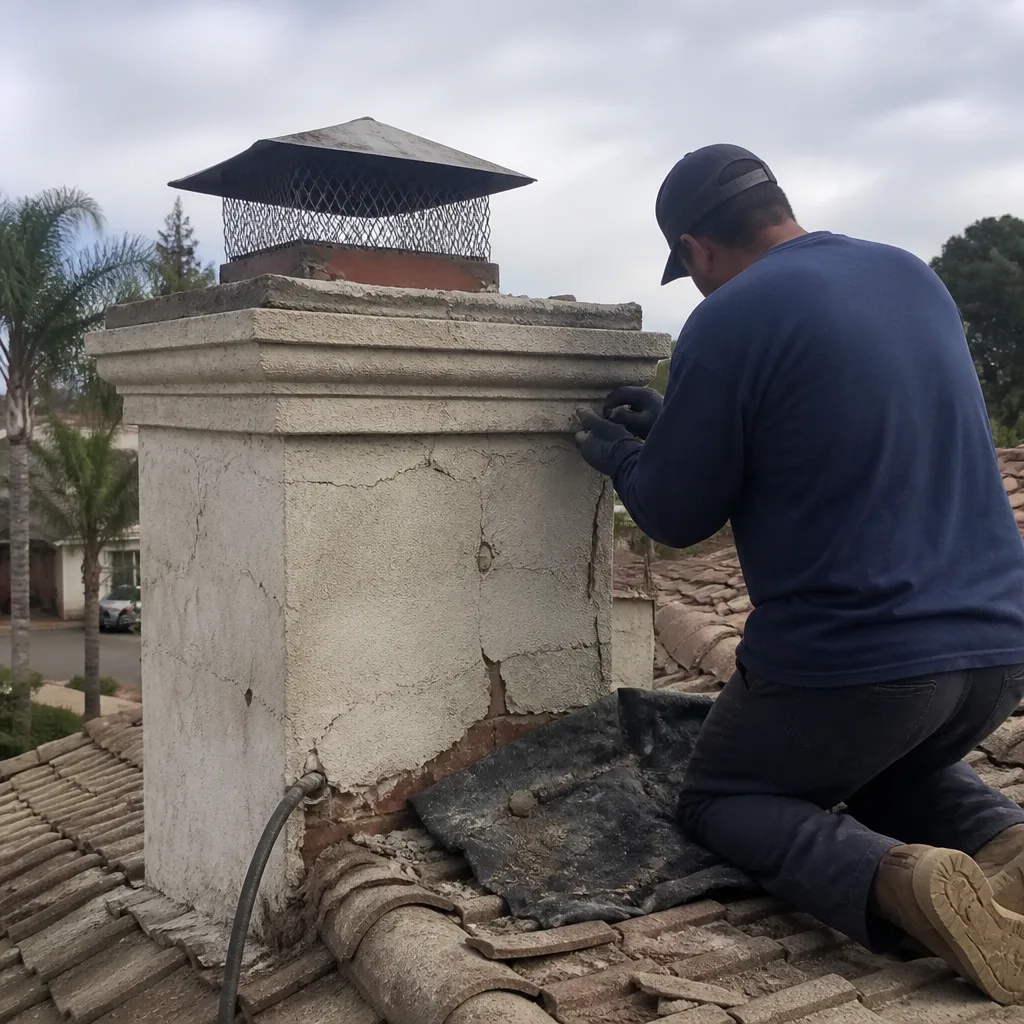 Before
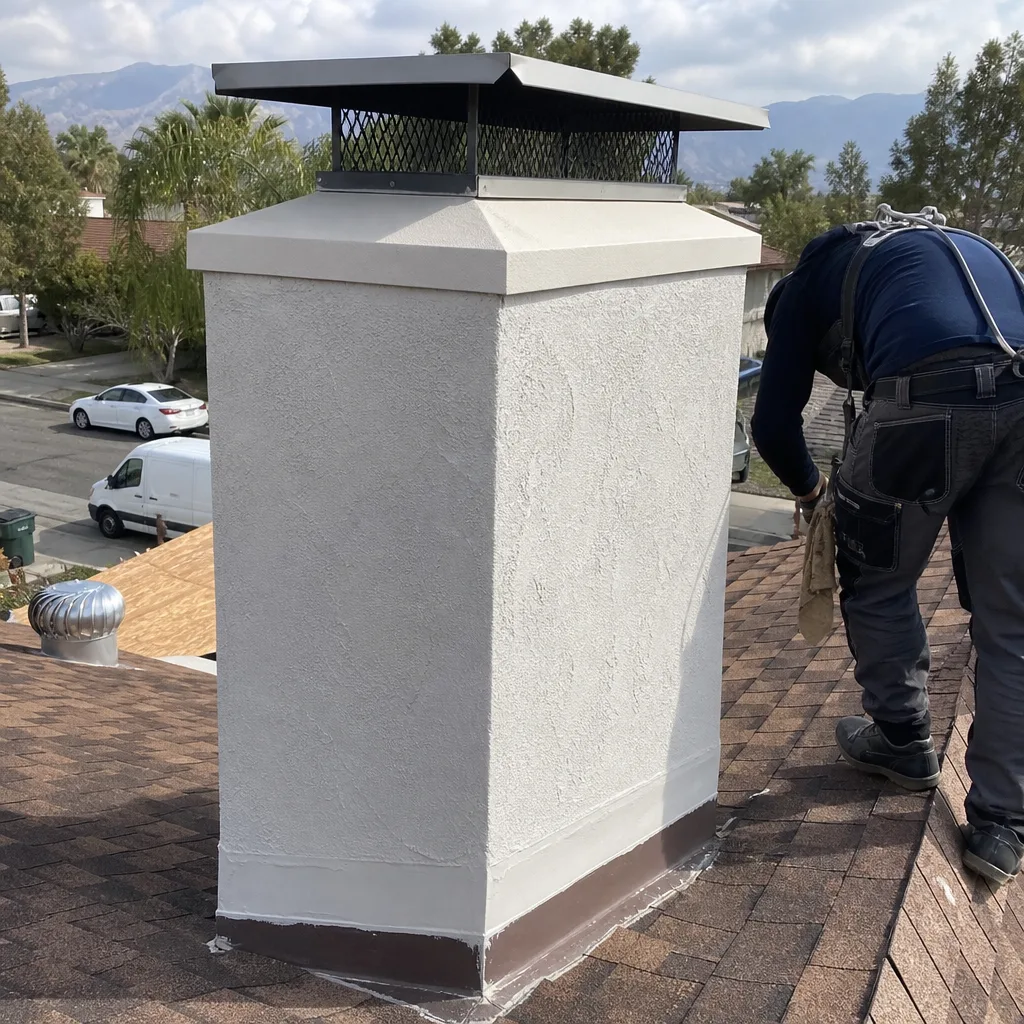 After
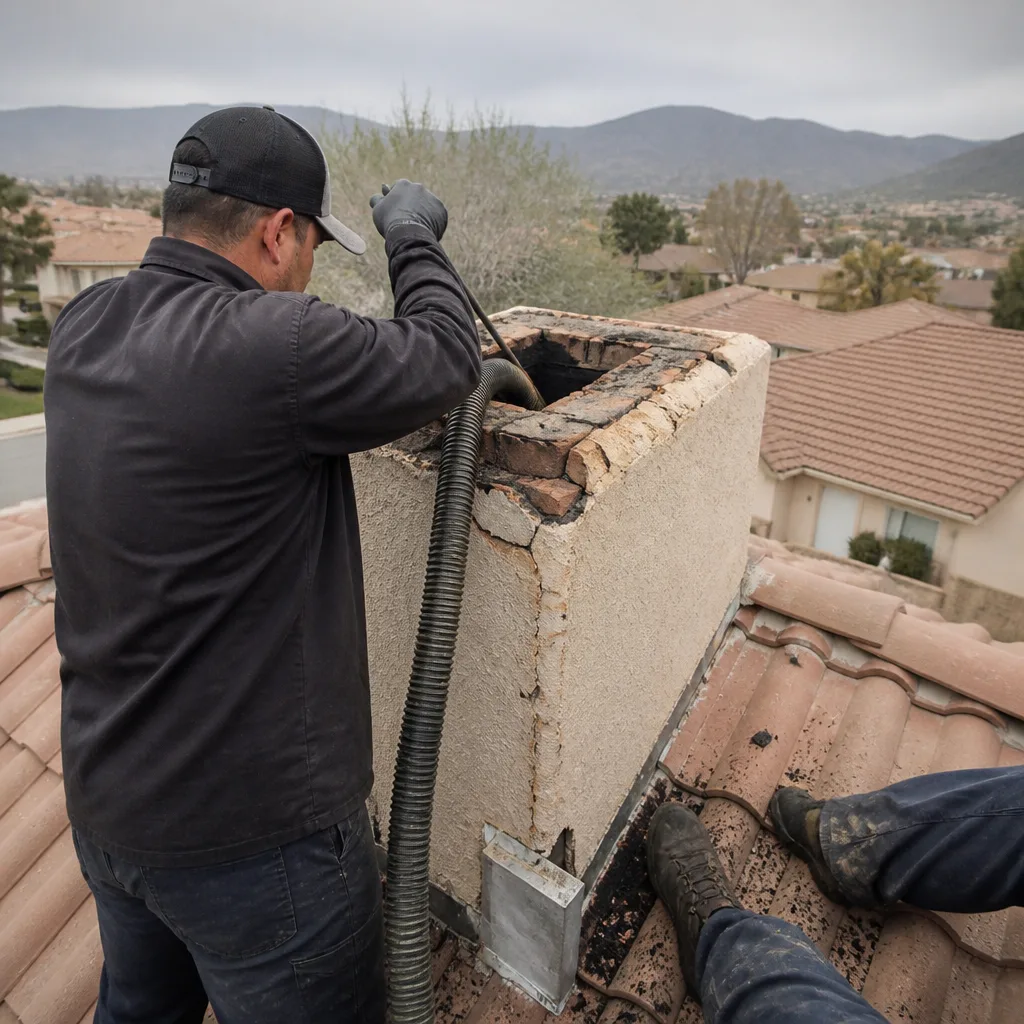 Before
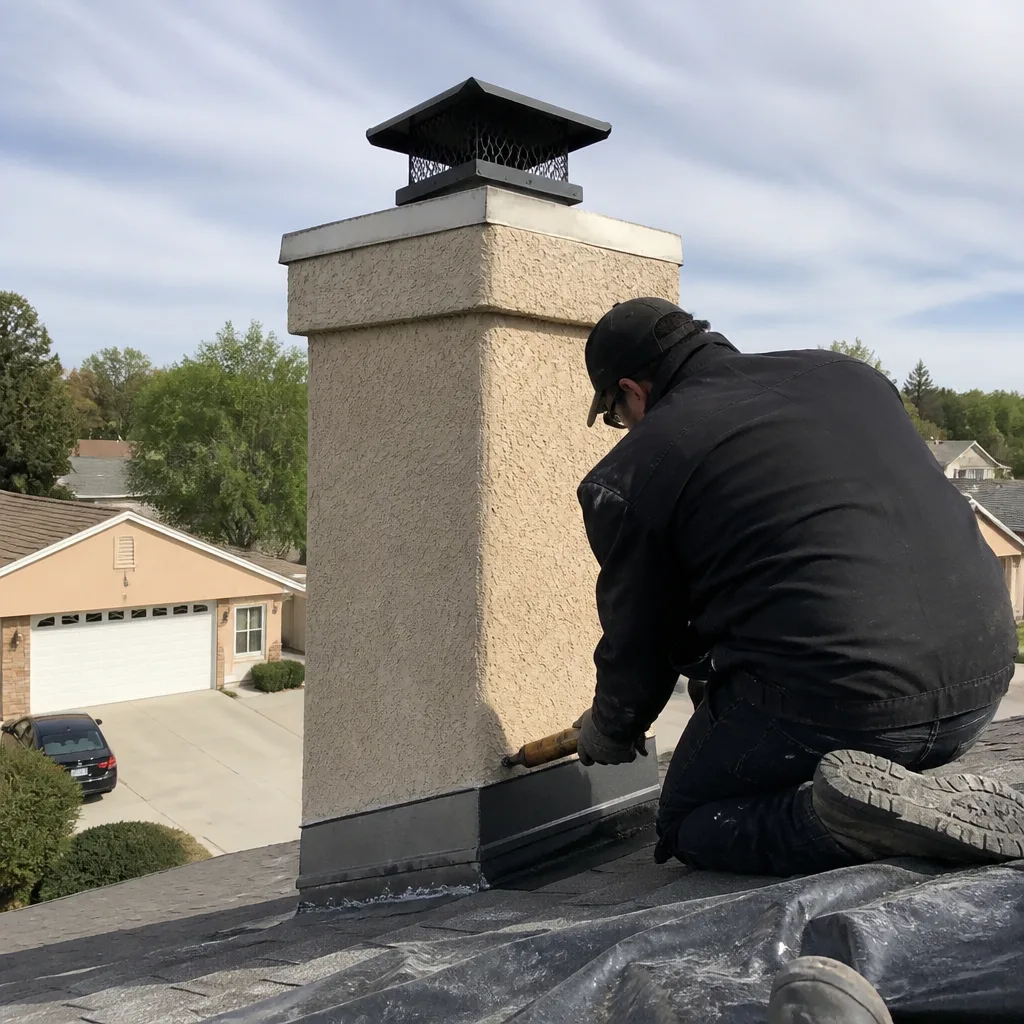 After
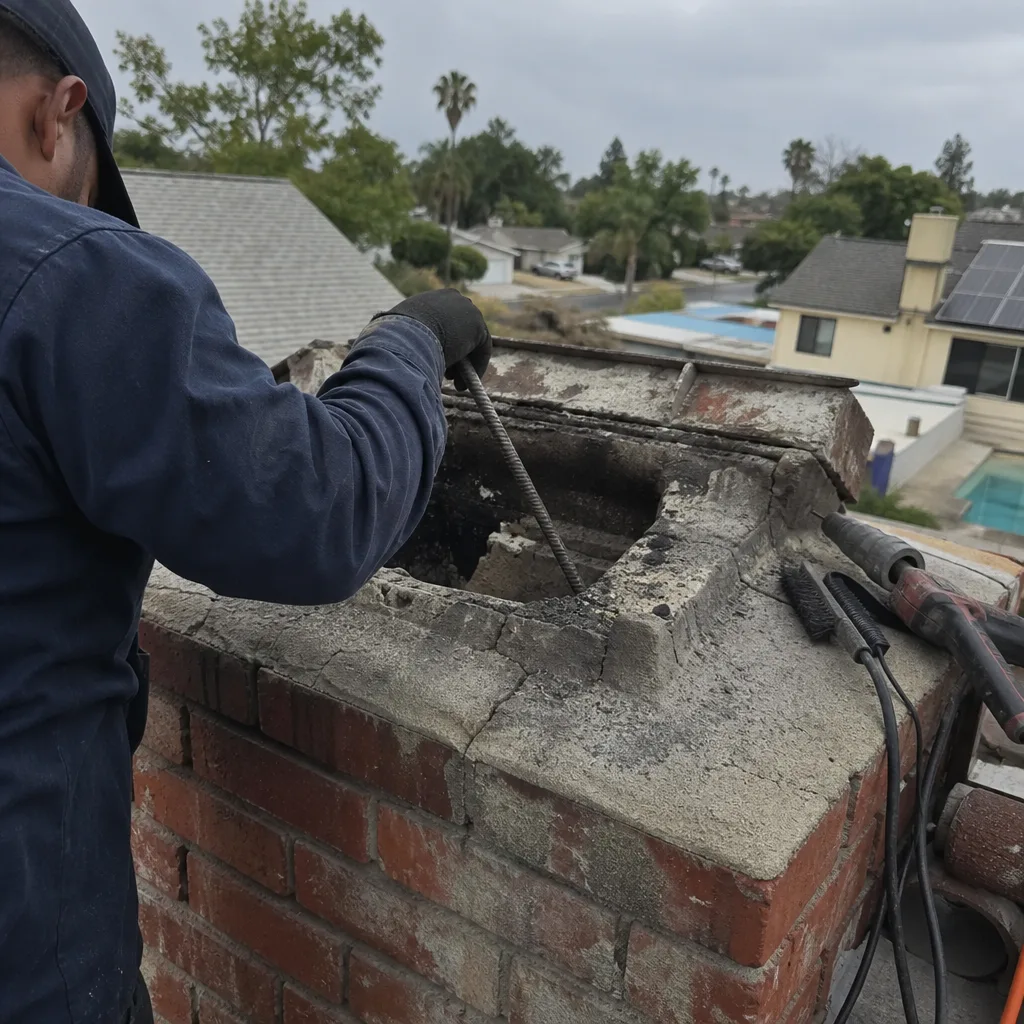 Before
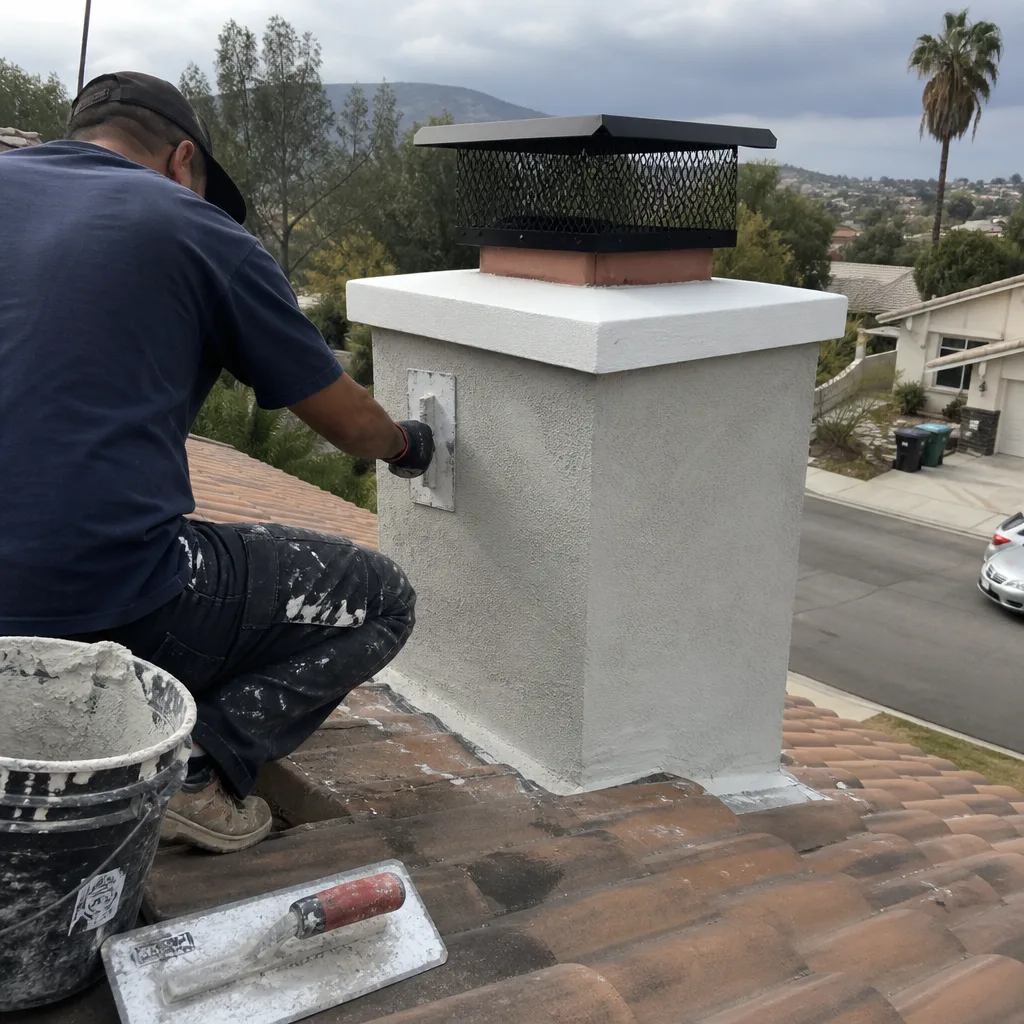 After
When to Call a Professional
Call when you notice smoke rollout more than once, when you find debris in the firebox that you didn’t put there, when the cold chimney smell persists after a thorough cleaning, when efflorescence appears on exterior brick, or when you hear mechanical sounds from the flue on calm days. These are not wait-and-see conditions. They are signals that something inside the system has changed, and the change runs in the direction of either water damage or venting failure. Mantel Chimney Sweep offers free estimates in Moreno Valley – call (844) 821-5749 – and you can find more guides & resources on our blog. We’ll camera the flue, show you exactly what’s going on, and give you a straight answer on whether the fix is a sweep or a repair.
Frequently Asked Questions
A chimney that’s used regularly during burning season should be swept once a year, and the best time in Moreno Valley is late summer before the first cold snap, when scheduling is easier and any wildfire-season residue from the previous year gets removed. Homes that burn more than three cords a season, or that burn unseasoned wood, may need a second sweep mid-season. The National Fire Protection Association standard is that chimneys be swept when creosote reaches one-eighth inch of accumulation, which for most households works out to annual. Call (844) 821-5749 to schedule a sweep and we’ll let you know if your buildup rate suggests a different interval.
It depends on the extent of the damage, and the only honest way to know is a camera inspection. Early-stage cracking in a clay liner can often be addressed with HeatShield, a cerfractory sealant that resurfaces the inside of the flue and restores a continuous passageway without a full replacement. Advanced damage – collapsed sections, multiple large cracks, or corrosion in a metal liner – typically requires a full DuraFlex stainless steel replacement. We’ve repaired liners that other companies said needed full replacement, and we’ve recommended replacement when repair would have been a patch job. The camera tells the story. Estimates are free.
Creosote accumulates, and the risk path is specific: a thick enough layer becomes fuel for a chimney fire, and even short of a full chimney fire, the narrowed flue produces poor draft, smoke rollout, and elevated carbon monoxide risk inside the home. The same applies to the chimney’s structural health. Water damage that’s caught early is a crown repair. Water damage that’s ignored becomes a spalled masonry shell and a failed liner. Skipping a sweep doesn’t save money. It transfers the cost downstream to repairs that cost five to ten times more than a cleaning would have. Call (844) 821-5749 to schedule a sweep on your timeline, not on the chimney’s.
That’s a negative air pressure issue. Your AC system’s return air, combined with a tight house envelope, pulls air down the chimney and brings creosote odor into the living space. The fix usually involves a better-sealing damper, a top-mounted cap designed to resist downdraft, and in some cases an air supply adjustment. If the smell is strong, there’s also creosote present in meaningful quantity, so the chimney should be swept before you address the airflow side. A clean flue is the baseline. The draft improvements are what keep it from coming back.
Yes, for two reasons that occasional users often miss. First, infrequent fires burn cooler and produce more creosote per fire than hot, regular burns – so low usage doesn’t mean low buildup. Second, a fireplace that sits unused is more likely to develop animal nests, rusted dampers, and silent water damage, because no one is paying attention to it. An annual visit catches all of that before it becomes a structural bill. Consider bundling it with a dryer vent cleaning, which follows the same logic: the vent accumulates lint whether you think about it or not. Call (844) 821-5749 for current scheduling.
If you live in Moreno Valley and your home was exposed to significant wildfire smoke, a visual inspection and likely a sweep are worth doing even if you didn’t use the fireplace during the fire. Wildfire smoke carries fine particulates that coat the flue interior and combine with existing creosote, creating a stickier residue that accelerates future accumulation. The same wind events that carry smoke also stress chimney caps, crowns, and flashing. A post-wildfire-season inspection checks both: the condition of the flue interior and the condition of the exterior components that wind may have loosened.
The Bottom Line
Chimney warning signs are mechanical signals, not mysteries. Smoke rollout points to a restricted flue. Efflorescence points to water moving through masonry. A cold campfire smell points to creosote buildup and draft issues. Falling debris points to liner movement. In Moreno Valley’s climate, with Santa Ana winds and wildfire smoke adding stress to every chimney on a regular basis, the smartest thing you can do is catch these signs at the first appearance and act on them. A clean sweep is the baseline. What happens after the cleaning, if the camera finds damage, is where the right materials matter. HeatShield and DuraFlex exist to fix failing liners, not just document them. From flue to dryer vent, it’s all the same principle: catch it early, fix it right, and don’t let a small problem become a house-sized one.
Written by the team at Mantel Chimney Sweep, serving Moreno Valley since 2018.